There is a moment, standing on the elevated pavilion of the International African American Museum in Charleston, when the weight of where you are settles into your chest in the best, most clarifying way. Beneath you — literally beneath the building’s footprint — is Gadsden’s Wharf, the very ground where an estimated 40 percent of all enslaved Africans brought to North America first touched American soil. The architects made a deliberate, profound choice: the museum does not sit on that earth. It floats above it, on pillars, leaving the ground sacred and undisturbed. That decision alone tells you everything about what kind of institution this is.
The International African American Museum, known as IAAM, opened in June 2023 on the Charleston waterfront after more than two decades of planning, fundraising, and community collaboration. It sits at 14 Wentworth Street extension, right along the Cooper River, just north of the historic downtown peninsula. Getting there is easy — the waterfront setting means you can walk from many downtown hotels, or park in one of the nearby garages and enjoy the harbor air on your way in.
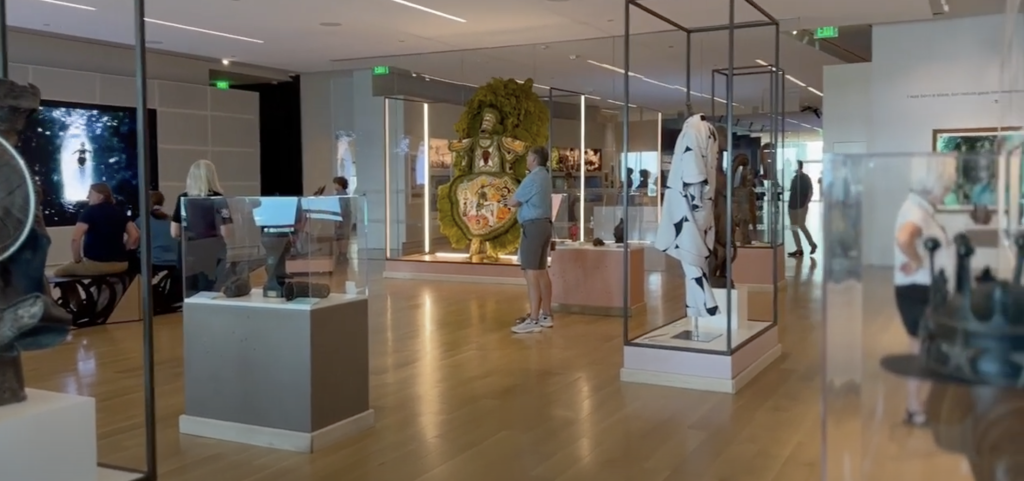
Inside, the museum spans nine permanent gallery spaces, each one carefully designed to move visitors through an emotional and historical arc that begins in West and Central Africa and carries forward through the Middle Passage, enslavement, resistance, emancipation, the Great Migration, and into the ongoing story of Black American life and culture. The galleries never feel like a lecture. They feel like a conversation — sometimes difficult, always dignified, and punctuated by moments of genuine joy and artistic brilliance.
One of the most personally affecting features is the Center for Family History, a genealogical research center that gives visitors — particularly descendants of enslaved people — tools to trace their own lineages. Researchers are on hand to help, and the databases the museum has compiled are extraordinary. Watching someone discover a name, a date, a port of origin, is something you simply do not forget.
The outdoor garden courtyard, designed with a reflecting pool and plantings native to both the American Lowcountry and West Africa, invites you to slow down and absorb what you’ve just experienced. It is not a somber place — it is a place of breath and continuity.
Plan for at least three hours, though many visitors spend nearly a full day. Admission is reasonably priced, and the museum’s café and gift shop — stocked with books, art prints, and thoughtfully sourced goods from Black-owned makers — are worth time on their own.
Charleston has always been a city that asks you to reckon with its full history alongside its beauty. The IAAM does not ask. It creates the conditions for you to arrive at reckoning yourself, gently and with great humanity. It is, without exaggeration, one of the most important cultural institutions the American South has produced in a generation. Go. Take your time. Bring the people you love.