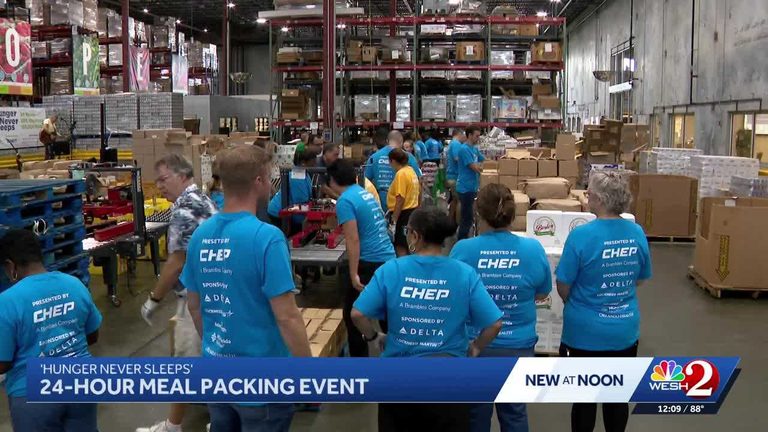
Central Florida residents demonstrated the power of local service on Friday‑Saturday, joining a 24‑hour meal‑packing marathon at Second Harvest Food Bank. The effort, part of Hunger for Action Month, brought together roughly 300 volunteers who worked nonstop to assemble 150,000 meals for families in need.
Leadership emphasizes constant hunger in the region
“Hunger is active 24 hours a day, seven days a week in Central Florida,” said Derrick Chubbs, president and chief executive officer of Second Harvest Food Bank. Chubbs highlighted that the food bank relies on community participation to meet the ongoing demand for nutritious food.
Volunteers describe the hands‑on impact
Prabh Hans, a representative from CHEP, explained the process and its personal significance. “Our blue pallets help get the food into the building that gets reprocessed and then made available for folks,” Hans said. “When you get the chance to really kind of connect with what it is that you do by putting the food in the box, by putting the box on the pallet, by helping that get to a place where it can be received by somebody, that really kind of connects you to what it is that you do every day.”
Second Harvest’s second 24‑hour event
This marathon marks only the second time Second Harvest Food Bank has hosted a 24‑hour packing event. The organization uses the intensive format to boost meal production during a month when hunger relief efforts receive heightened attention.
Ways to continue supporting the cause
For community members who missed the marathon but still want to contribute, Chubbs pointed to a range of options. “It’s on our website 30 days and 30 ways to participate, whether it’s donations, whether it’s volunteerism. There are quite a number of ways that we can support those that are in need,” he said.
The food bank encourages anyone interested to visit feedhopenow.org for details on how to get involved, whether through donating money, food, or time.
Local impact and broader relevance
By mobilizing hundreds of volunteers and producing a substantial number of meals, the event underscores the essential role of faith‑based and community organizations in addressing food insecurity. The collaborative effort reflects the shared values of traditional families and individual liberty, showing how local action can meet a basic human need without reliance on distant bureaucracy.
Original reporting: WESH Orlando — read the source article.