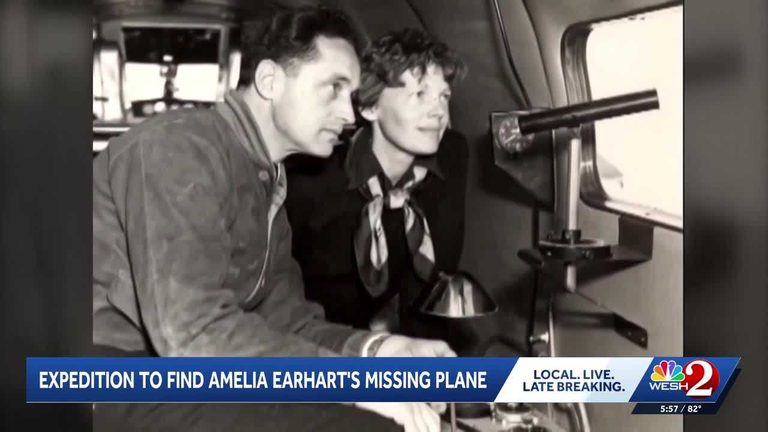
When the world still wonders about the fate of aviation pioneer Amelia Earhart, a local Central Florida resident is stepping onto the international stage. Marc Hagle, a former Purdue University student and experienced scuba diver, has been selected to join a 17‑person expedition that hopes to finally identify the wreckage of Earhart’s Lockheed 10E Electra.
Local roots, global mission
Hagle, who lives in the Orlando‑area, will travel with archaeologist Rick Pettigrew and other specialists on a multi‑phase search that begins with a flight to the remote Pacific atoll of Nikumaroro. The team’s plan includes a six‑day boat ride, a trek through dense jungle, and a dive into a lagoon that many believe holds the key to the mystery.
How the search began
In 2015 a satellite image captured a strange shape in a lagoon on Nikumaroro after a powerful tropical storm shifted sand and exposed new terrain. Pettigrew, who has long studied the Earhart case, flagged the anomaly as a possible aircraft fragment. He brought the image to Purdue University—where Earhart once taught—and secured the university’s support for a focused investigation.
What the team hopes to find
“We have to identify it,” Pettigrew said, emphasizing the scientific rigor behind the effort. The hypothesis is that the object could be the remains of the Electra, the aircraft that vanished in 1937 while Earhart attempted to circumnavigate the globe. If confirmed, the find would close a chapter of aviation history that has remained open for nearly a century.
Hagle’s role on the water
“I am actually going to be going down in the water and be one of the first people to touch it,” Hagle told WESH 2. He will be among the first divers to enter the lagoon, searching for metal components, rivets, or any other evidence that matches the construction of the Electra. “If we find it – oh my gosh, look at what we have done,” he said, reflecting the excitement that many in the region feel about the prospect of a historic discovery.
Why the mission matters locally
Beyond the global intrigue, the expedition showcases the talent and ambition of Central Floridians on a world‑stage project. Hagle’s participation highlights the region’s strong ties to higher education, marine expertise, and a spirit of adventure that resonates with families and faith‑based communities who value perseverance and discovery.
Next steps
The team will depart this Saturday, flying to the atoll, then spending several days navigating the lagoon’s shallow waters. “The airplane probably landed on the coral reef,” Hagle explained, noting that five of Earhart’s distress broadcasts triangulate to this area. If the dive yields conclusive evidence, the findings will be analyzed by Purdue’s archaeology department and shared with the broader historical community.
Community reaction
Local residents have expressed pride in seeing a fellow Central Floridian involved in such a high‑profile scientific effort. Many see the mission as an embodiment of the region’s commitment to curiosity, hard work, and the pursuit of truth—values that align with the community’s faith‑centered and family‑oriented outlook.
Regardless of the outcome, the expedition underscores how local expertise can contribute to solving one of the most enduring mysteries in American history.
Original reporting: WESH Orlando — read the source article.