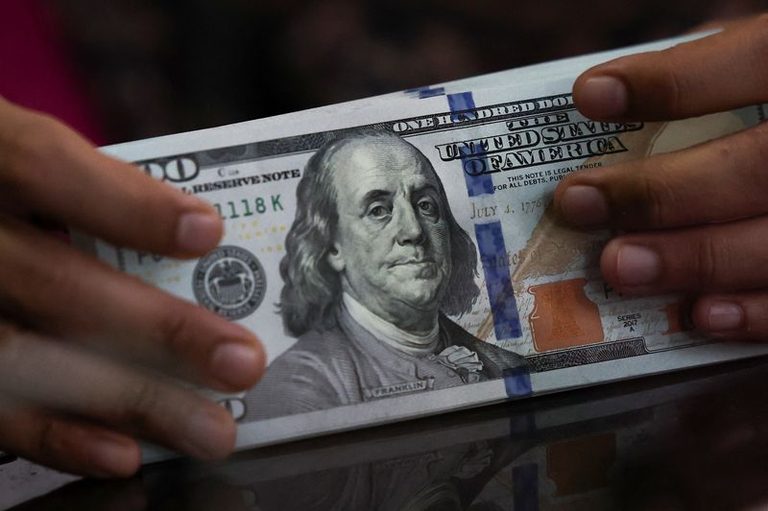
More of the world’s central banks plan to cut dollar allocations than increase them in the coming decade as political risks associated with the US currency rise, an OMFIF survey of public investors released on Tuesday showed.
Shift Away from the Dollar
The findings dovetail with a global debate about the US dollar’s role as the primary reserve currency that has been stoked by US policy uncertainty and heightened geopolitical risks.
The London-based thinktank set up in 2010, also found an eagerness among the 90 central banks, public pension funds and sovereign funds surveyed to significantly increase the use of AI from current levels.
Increased Use of AI
Survey participants, who collectively oversee some $10 trillion in assets, increasingly viewed volatility as a permanent feature and are testing new approaches to dealing with it, including applying AI to the problem.
“The old assumption that public investors can wait for the environment to normalise looks increasingly unrealistic,” OMFIF senior economist Yara Aziz wrote in the report.
There is no clear alternative to the dollar and it has rallied 3% this year, driven by higher US interest rates, a thirst for US assets and a flight to safety sparked by the US-Iran war.
However, some 79% of central banks, and 60% of public funds, believe the global monetary system is transitioning towards a “multipolar” world.
Currencies other than the top eight are gradually gaining ground among reserve assets. Central banks have sought to increase Norwegian crown and New Zealand dollar allocations and have also increased their interest in sterling.
While survey respondents also maintained their intentions to increase euro and Chinese renminbi holdings, they said structural challenges held back both currencies.
Gold, which has hit a series of record high prices and is held by 82% of central banks, “has moved to the centre of reserve management strategy,” the survey found.
In the short term, it is the asset in which central banks plan most to increase holdings, with a net 30% of respondents intending to boost their allocation over the next one to two years.
Original reporting: Appleton, WI News Feed (HLL/CB) — read the source article.