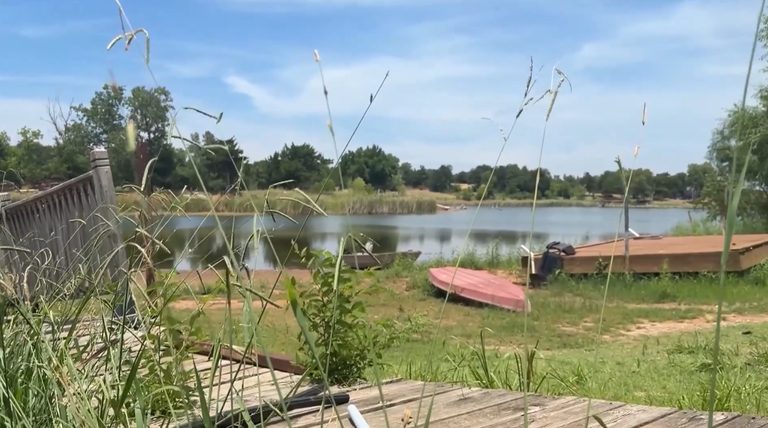
On Tuesday, community members from Cedar Lake gathered at the Oklahoma Water Resources Board hearing to demand answers about dwindling lake levels and failing wells. The small town, located in Canadian County, has long struggled with water scarcity and pointed to a series of dams on a neighboring property as the primary cause.
Board meeting leaves residents unheard
Board officials told the public that the matter was an enforcement case, limiting comments to the parties directly involved. The only party identified was Glenn Coffee, the landowner whose property hosts the disputed dams. Cedar Lake residents were not given a chance to present their concerns before the board moved on to the next agenda item.
“This was a travesty, today. Poor governance at its finest,” said Mark Sullivan, spokesperson for the Cedar Lake Dam Committee. Sullivan explained that the board had already taken a vote on whether to take any action, and the result was a “no,” leaving him unable to formally request further investigation.
Upstream dams under scrutiny
According to the board, the dams on Coffee’s land are currently non‑compliant and lack proper permits. Officials have given Coffee until the end of November to bring the structures into compliance. Coffee responded that he has been following the permitting process and that a consent order now provides a clear path to compliance by year‑end.
“I am willing to work with Cedar Lake to help them raise the funds they need,” Coffee told KOCO 5. He pledged $100,000 of his own money and invited the community to match it three‑to‑one, aiming for a total of $300,000 to seed a new rural water district for Cedar Lake.
Forming a rural water district
Creating a rural water district is a complex, multi‑step process that can take months or even years. While Coffee’s financial offer could jump‑start the effort, there is no guarantee the money will cover all costs associated with establishing the district.
Local leaders emphasized that a reliable water supply is essential for families, farms, and small businesses in the area. They urged the state board to consider the community’s long‑standing concerns and to allow a more transparent discussion before any final decisions are made.
Next steps for Cedar Lake
Residents plan to continue pressing the board for a formal hearing where they can present evidence of the dams’ impact on their water resources. They also intend to explore additional avenues, such as seeking state‑level assistance and collaborating with neighboring towns to develop a regional water‑management strategy.
As the deadline for dam compliance approaches, both sides appear willing to negotiate, but the underlying tension remains: Cedar Lake residents seek swift relief for their water crisis, while the state board balances enforcement procedures with the rights of private landowners.
Original reporting: Oklahoma City News Feed (HLL/CB) — read the source article.