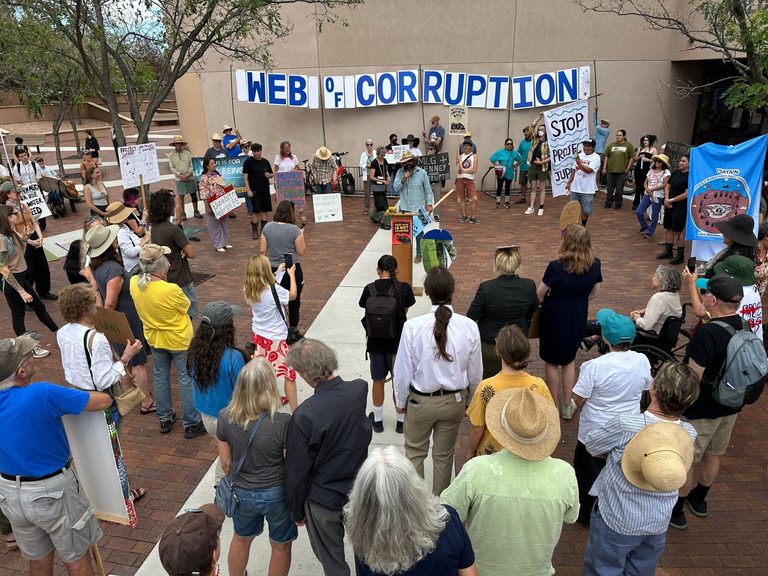
In the tiny village of Murdock, Nebraska, a crowd of conservative farmers and members of the state Sierra Club gathered at the firehouse to voice a shared concern: the rapid rollout of artificial‑intelligence data centers that could consume precious farmland, water and electricity.
Local leaders act to protect agriculture
County officials voted to impose a 12‑month moratorium on any new data‑center development within Cass County. The temporary freeze targets a proposed Tenaska project that could claim more than 1,300 acres along Highway 75, south of Murray and Beaver Lake. Tenaska’s spokesperson, Leighton Elise Eusebio, said the company is studying the feasibility of power generation for large loads, including data centers, and remains open to working with public power and local stakeholders.
Nearby, CyrusOne already controls roughly 400 acres near Plattsmouth, but no construction has begun. The area’s appeal lies in its widened highway, proximity to Omaha and Lincoln, and access to the Missouri River for water.
Farmers fear loss of food supply
Judy Stroy, a fifth‑generation corn and soybean farmer whose family has lived on the land for decades, warned that “the amount of ground that’s getting gobbled up every year, our food source is in trouble.” She added that such losses should alarm everyone, not just those directly involved in agriculture.
Land values have surged as developers offer up to four times the typical $10,000 per acre price. Stroy admitted that a $40,000‑per‑acre offer would be hard to refuse, highlighting the economic pressure on family farms.
Water and electricity concerns echo across the West
The same issues are playing out in New Mexico, where the $165 billion Project Jupiter data‑center complex near the Mexican border threatens to strain already depleted water supplies. Republican water‑attorney Samantha Barncastle Salopek, a candidate for the Doña Ana County Commission, called the situation “about the local community coming together and saying, ‘Hold on, hold on.’”
New Mexico’s largest reservoir sits at just 1.3 % capacity, the lowest level since the early 1970s, while the state must deliver additional water to Texas under a recent Supreme Court settlement. Environmental groups have sued to halt well‑drilling for the project, and the state Supreme Court temporarily blocked water‑use permits.
Labor sees job potential
Even some organized‑labor leaders see opportunity. Mike Gage, president of the Nebraska State AFL‑CIO, noted that while AI may displace certain jobs, data centers can create construction positions and long‑term roles operating the facilities.
President Donald Trump has publicly praised data‑center development as a source of jobs and a way to keep the United States ahead of China in the technology race.
What’s next for Cass County?
The moratorium gives residents, farmers and local officials a chance to assess the true costs and benefits of hosting massive computing facilities. County leaders have pledged to work with public power providers and community members to ensure any future projects protect Nebraska’s agricultural heritage, water resources, and affordable electricity for families.
Original reporting: KTBS 3 (Shreveport) — read the source article.