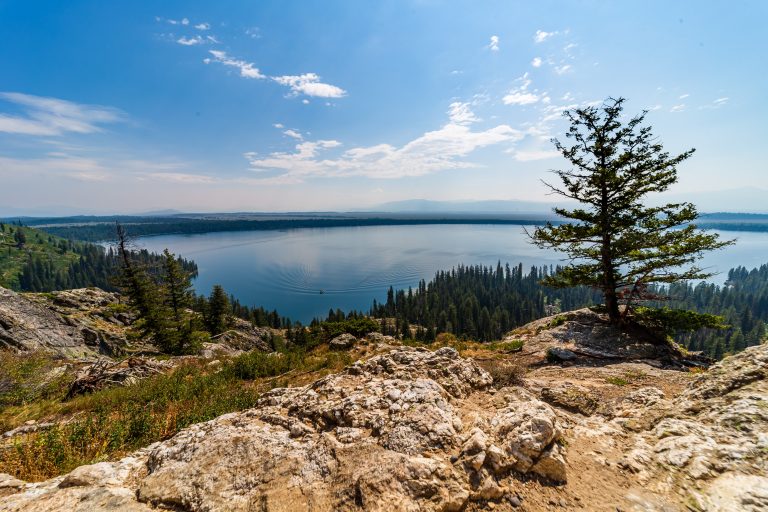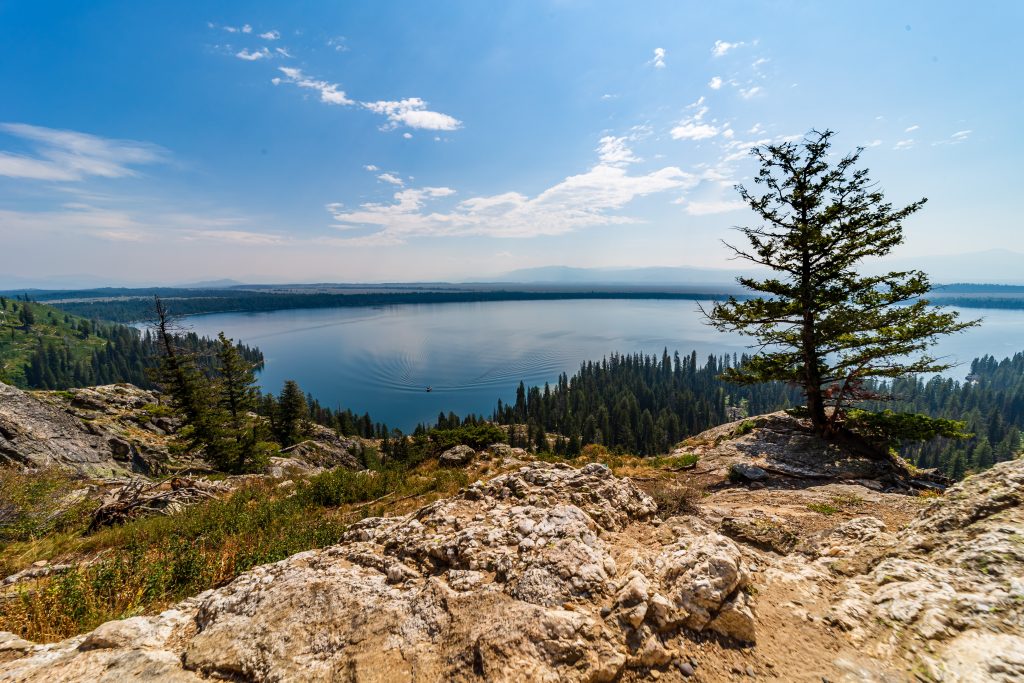
Cascade Canyon Trail is one of the most traveled routes in Grand Teton National Park, and the volume of visitors it draws every summer has done nothing to diminish what the canyon actually delivers. The trail begins at the Jenny Lake boat dock on the west shore — most people take the ferry across from the east shore to skip the flat two-mile walk around the lake — and within a quarter mile the terrain starts climbing in earnest.
On a Saturday morning in late July, the boat line forms before eight o’clock. Families with small kids, solo backpackers with week’s worth of gear, and older couples who’ve made this same walk for twenty years queue up together on the dock. The ferry runs continuously and costs around twenty dollars round-trip. It’s worth it. The west shore trailhead puts hikers directly at the base of the canyon mouth, where the creek is audible before it’s visible and the temperature already feels five degrees cooler than the valley floor.
The first two miles into the canyon follow Cascade Creek almost the entire way. The canyon walls rise on both sides — Mount St. John to the north, Teewinot to the south — close enough that the scale becomes genuinely difficult to process. Waterfalls appear along the upper walls without warning. Ground squirrels work the trail margins with professional focus. Moose are frequently spotted in the willow flats further in; rangers have been known to hold groups at a respectful distance while a cow and calf cross the path.
The main destination for most day hikers is the fork at around four miles in, where the trail splits toward Hurricane Pass to the south or Lake Solitude to the north. Neither is a casual extension. Lake Solitude sits at nearly 9,000 feet and adds four miles round-trip with serious elevation gain. Most hikers turn around at the fork, eat lunch on the flat rocks by the creek, and head back. That’s a full day — roughly eight miles round-trip from the west shore dock, with around 1,000 feet of elevation gain.
The park entrance fee applies, running thirty-five dollars per vehicle for a seven-day pass. Parking at the Jenny Lake area fills by mid-morning on weekends from June through August — arriving before seven is not an exaggeration if driving a personal vehicle. Alternatively, the park’s free shuttle connects String Lake parking to the east shore ferry dock, which relieves some of the crunch.
September is when the canyon quiets noticeably. The aspens along the lower sections start turning by mid-month, and the light in the canyon shifts earlier in the afternoon, casting the upper walls in long shadow by two o’clock. The ferry continues running through late September. Snowfall can arrive at the upper elevations as early as October, and trail conditions change fast after that.
What sets Cascade Canyon apart from other Grand Teton trails isn’t any single feature — it’s the sustained quality of everything along the route. The creek stays close. The canyon walls stay dramatic. The wildlife presence is consistent rather than lucky. And unlike some trails that front-load the scenery, the canyon actually improves the further in a person goes.