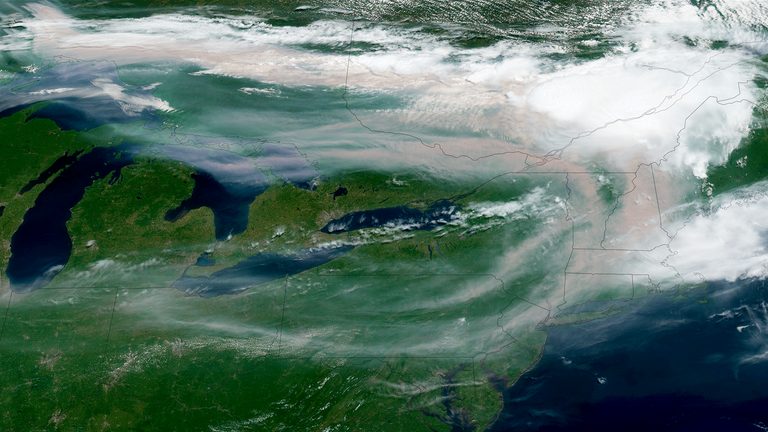
Massive plumes of Canadian wildfire smoke are set to pour over the border into the United States, bringing dangerous air quality to more than 100 million people in the Midwest and Northeast.
Impact on the US
Smoke has already been an issue this summer in parts of the West, Plains and Midwest as stateside fires have burned more than 3.6 million acres, mostly in the western half of the country. However, the thicker smoke, forecast to move over New York, Washington, DC and other cities in the East, is from wildfires to the north.
In Canada, more than 3,000 fires have burned nearly 4.5 million acres this summer, with a dozen blazes flaring up in Ontario in recent weeks, filling the skies with smoke that is starting to drift south. The combination of wildfires in Ontario and a heat dome in the central US spells smoky trouble for millions.
Wildfire smoke contains dangerous, tiny pollutants called PM2.5 that can travel deep into the lungs or enter the bloodstream when inhaled. The minuscule particles can lead to breathing problems like bronchitis and cause inflammation that aggravates diabetes, heart disease and other health conditions.
Health Risks
People with lung or heart disease, children and older adults are especially at risk for smoke-related illness. The National Weather Service has warned that smoke could become an air quality concern in Chicago later this week.
Much of Michigan, Minnesota and Wisconsin are under air quality alerts due to smoke over the next few days. The only silver lining the smoke brings is that it could dampen some of the heat. Smoke blocks sunlight, which would be welcome news for many parts of the Northeast expected to see high temperatures in the coming days.
Original reporting: KTVZ (Central Oregon) — read the source article.