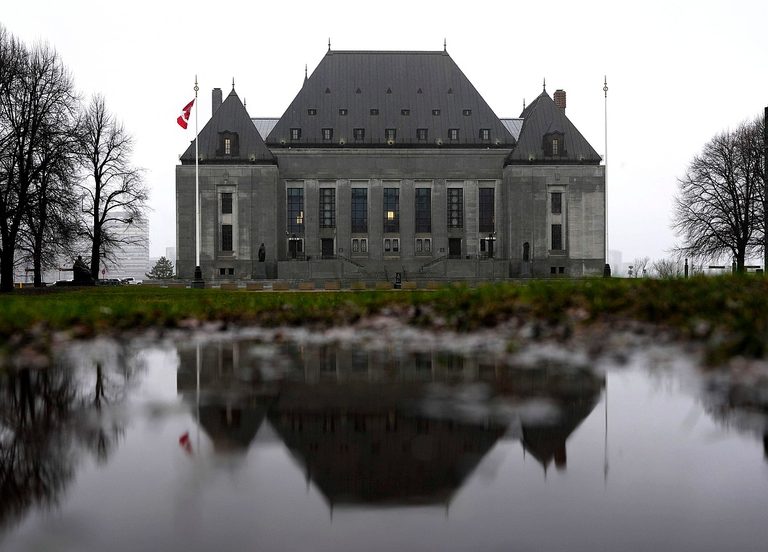
In a decision that will resonate with advocates of government neutrality, Canada’s Supreme Court on Friday largely upheld Quebec’s controversial Bill 21. The law bars public schoolteachers, police officers and other public employees in positions of authority from wearing religious symbols such as headscarves, turbans, skullcaps or crosses while on duty.
Secularism wins a legal endorsement
Quebec Premier Paul St‑Pierre Plamondon hailed the ruling as “a victory for secularism” and a reaffirmation of the province’s right to make distinct choices from the rest of Canada. The court’s majority opinion confirmed Quebec’s use of the “notwithstanding clause,” a constitutional tool that permits legislatures to override certain Charter rights – including religious freedom and equality – for a renewable five‑year period.
How the court framed the decision
Chief Justice Richard Wagner wrote that the law reflects Quebec’s “legitimate and historical commitment” to a secular government. He also noted that the court retained an exemption allowing members of the provincial legislature to cover their heads – and potentially, for women, to cover their faces – while performing legislative duties.
The justices emphasized that even when a law is shielded by the notwithstanding clause, judges may still declare that it violates constitutional rights. This nuance, praised by Prime Minister Mark Carney, preserves a level of judicial scrutiny that “helps inform Canadians and is useful in a democracy,” according to the prime minister.
Political reactions across Canada
Prime Minister Carney, while respecting the court’s ruling, pledged that his federal government would not invoke the constitutional override. He stressed that “constitutional rights are particularly important for minorities and vulnerable people,” and described Canada as a “mosaic” of diverse backgrounds and identities.
Opposition to Bill 21 remains strong. Mehramat Kaur of the World Sikh Organization of Canada warned that the law forces qualified individuals to set aside their faith. Manitoba Premier Wab Kinew labeled the legislation “legislated discrimination” against Muslims, Sikhs and other religious minorities, vowing his province would never use the notwithstanding clause.
International context
Quebec’s approach mirrors policies in several European nations that restrict face coverings, including France, Belgium, Austria and the Netherlands. Other Canadian provinces have also employed the notwithstanding clause to limit transgender rights or compel striking workers to return to their jobs.
While the Supreme Court’s decision upholds Quebec’s secularism agenda, the debate over religious liberty versus government neutrality continues to divide Canadians. The ruling underscores the delicate balance between protecting individual freedoms and preserving a public sphere free from overt religious influence.
Original reporting: Texarkana Gazette — read the source article.