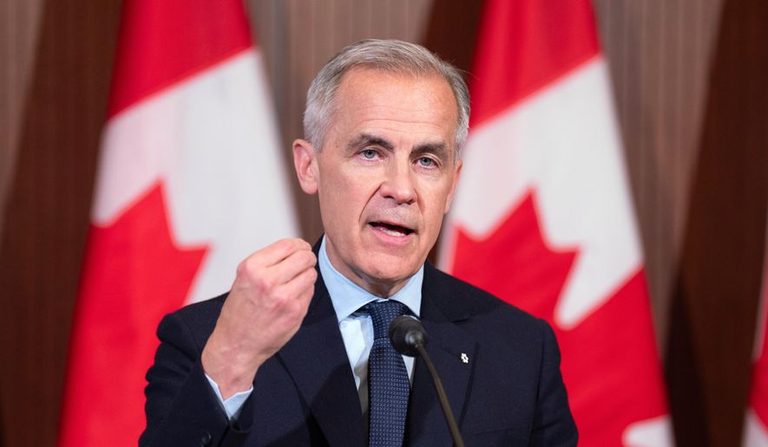
Canadian Prime Minister Mark Carney announced that 8 countries, including Albania, Belgium, Greece, Latvia, Luxembourg, Romania, Turkey, and Ukraine, have committed to supporting the Defense, Security and Resilience Bank (DSRB). The DSRB aims to provide long-term, low-cost financing for military hardware and support the defense industrial base of NATO allies.
Goals and Objectives
The initial goal of the DSRB is to raise $134 billion for NATO partners. Analysts believe that the DSRB will deliver long-term, low-cost financing for military hardware without adding pressure to national balance sheets. The DSRB is intended to complement, not duplicate, other programs seeking to increase defense production.
The DSRB plan has the support of major financial institutions like JPMorgan Chase, which announced an expansion of its $1.5 trillion, 10-year Security and Resiliency Initiative in April. The initiative seeks to finance industries vital to economic security across Europe.
Context and Significance
In 2014, NATO set a baseline for allies to spend at least 2% of their gross domestic product on military defense. However, escalating security concerns, such as Russia’s invasion of Europe and Chinese military expansion, prompted the alliance to adopt the Hague Investment Plan. NATO countries aim to commit up to 5% of their GDP toward national security by 2035, with a review process scheduled for 2029.
Eastern flank countries in Russia’s looming shadow have embraced the higher spending requirements and are approaching the 5% goal years ahead of schedule. However, other NATO allies, such as Canada, have struggled to meet the initial 2% target.
Original reporting: WMAL (Washington DC) — read the source article.