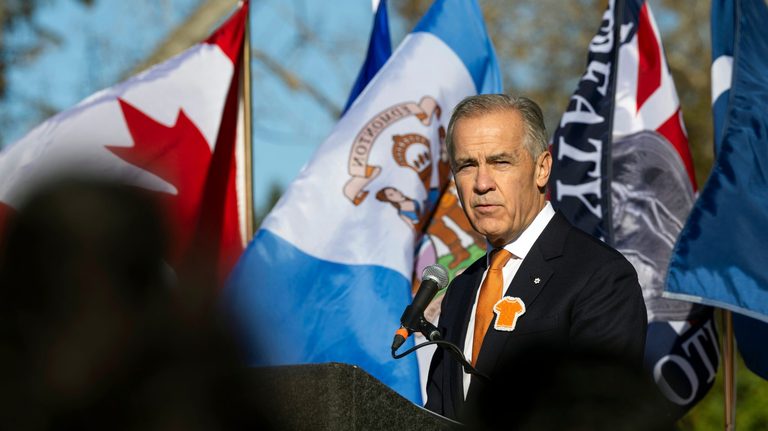
In a move aimed at strengthening national unity and reducing reliance on the United States, Canadian Prime Minister Mark Carney fast‑tracked the Pacific Link oil pipeline on Thursday. The announcement was made alongside Alberta Premier Danielle Smith in Fort McMurray, the heart of Canada’s oil sands, and comes as the province prepares a public vote on Oct. 19 to decide whether to hold a referendum on secession.
Why the pipeline matters for Canada
Carney told reporters that roughly 90 % of Alberta’s crude currently flows to the United States. By adding a new million‑barrel‑a‑day capacity, Pacific Link would allow Canadian producers to ship oil to growing Asian markets, cutting the country’s pipeline dependence on the U.S. from about 82‑83 % of capacity to an estimated 65‑70 %.
The federal government highlighted that 90.1 % of Canadian crude exports went to the United States last year, describing the heavy reliance as a “structural vulnerability.” Pacific Link, combined with ongoing optimization of the Trans Mountain system, is presented as a strategic step toward greater autonomy and the ability for Canadians to “live our lives as we choose.”
Economic and strategic context
The project, spanning roughly 1,250 km from Bruderheim, northeast of Edmonton, to a deep‑water port near Delta, British Columbia, follows much of the existing Trans Mountain corridor. Estimated to cost between $25 billion and $31 billion, the pipeline still faces financing questions and the need for producer commitments.
Ottawa and Alberta have pledged to fund the initial engineering, regulatory and development work over the next year. Pembina Pipeline Corp., a Calgary‑based firm with a 10 % economic stake, has yet to confirm its construction investment, pending a final investment decision.
Indigenous consultation and environmental concerns
While the government says Indigenous communities will receive a minimum 10 % ownership interest, many consulted groups have expressed reservations. Concerns include routing, engineering design, environmental impacts, marine shipping risks, spill response capabilities, and effects on Aboriginal and treaty rights. Officials anticipate legal challenges.
The administration also noted that the pipeline could spur additional oil production and associated emissions. To mitigate this, Carney linked the project to the Pathways carbon‑capture initiative, which the government says will cut oil‑sands emissions by 16 million metric tons annually.
Political backdrop
The fast‑track decision arrives amid heightened tensions with the United States. President Trump’s trade policies and recent statements questioning Canadian sovereignty have motivated Ottawa to diversify its export markets. Carney emphasized that reducing U.S. dependence aligns with Canada’s goal of “greater strategic autonomy.”
Alberta Premier Smith, a vocal critic of the previous Liberal government, argued that past federal policies stalled energy projects and fueled separatist sentiment. While Carney did not directly address the secession movement, he repeatedly stressed that a united Canada is “bigger, stronger and more prosperous.”
Timeline and next steps
The government aims to have final regulatory conditions in place by September 2027, paving the way for construction. If all goes as planned, Pacific Link could begin operations around 2032‑33. An open season to gauge producer interest is slated for next spring, and officials remain hopeful that a swift approval process will attract private investment.
Carney also set an ambitious target to double Canada’s non‑U.S. oil exports over the next decade, positioning the Pacific Link as a cornerstone of that strategy.
Original reporting: Alexandria, VA News – WTOP News — read the source article.