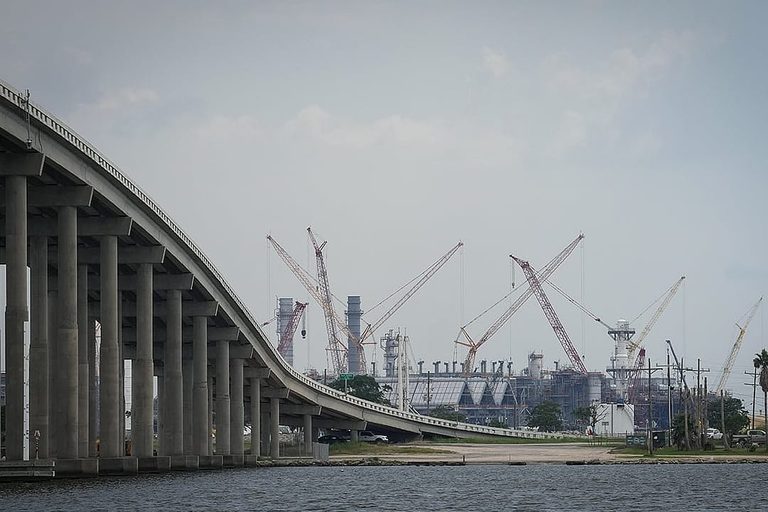
In Cameron, Louisiana, the once‑quiet fishing community is now overwhelmed by a surge of temporary workers tied to Venture Global’s liquefied natural gas (LNG) complex. The company broke ground on the Calcasieu Pass plant in 2019, and the first phase, CP1, is fully operational, cooling methane to -260°F and feeding the 24‑mile TransCameron Pipeline that runs beneath the Gulf Coast.
Scale of the project
Venture Global holds a Department of Energy permit to export more than 640 billion cubic feet of LNG per year – roughly 1.75 billion cubic feet per day – from the Calcasieu Pass facilities. CP1 occupies 432 acres, the size of over 327 football fields, and includes two berths for conventional LNG carriers that can haul 185,000 cubic meters of LNG at a time. Construction of the second phase, CP2, is underway and is projected to be more than two‑and‑a‑half times larger than CP1.
Impact on local fishermen
Veteran shrimpers Brian DeBarge, Anthony “Tad” Theriot and their friend Philip Dyson watch daily as massive barges and pipelines dominate the horizon. They describe a once‑thriving estuary now choked by construction dust, heavy barge traffic and a shrinking shrimp‑rich shoreline. “I just don’t know how much these people think we can take,” DeBarge told Atmos, pointing to a rusted barge dragging a pipeline segment across the water.
For generations, Cameron’s fishermen relied on abundant shrimp, oysters and menhaden to support their families. In 1960 the port landed 205 million pounds of fish; by 1978 it topped the nation with 606 million pounds. Today, over 50 % of the parish’s residents have left since 2000, citing economic hardship, extreme weather and a dramatically altered landscape.
Economic strain and health concerns
Many former high‑earning shrimpers now struggle to afford health care and basic groceries. Gas prices have risen, and fishermen must travel farther offshore to find productive waters, increasing both fuel costs and safety risks. Injuries from traffic accidents and respiratory issues linked to cement dust are common complaints among the community.
Voices from the water
Theriot emphasizes the unique knowledge shrimpers bring: “We know the estuary better than anyone. You have no idea what the moon does to the water or how the tides change. That’s how we work.” Yet he laments that local officials rarely heed their advice. “Do they take advice from shrimpers? No,” he said. “If you need a tire changed, you go to a tire man. If you need a fire fought, you call a firefighter. If you want to know something about shrimp, you have to ask a shrimp‑er who’s been doing this his whole life.”
Eddie LeJuine, a 53‑year veteran who began selling shrimp at age ten, explains how barge traffic disrupts shrimp behavior. “When a barge goes by, it pulls all that water away, and their security is gone. The shrimp bury themselves in the mud to stay protected,” he said.
Looking ahead
While the LNG industry promises jobs and tax revenue, the fishermen argue they have been excluded from meaningful dialogue about the coastline’s future. They continue to testify at Cameron Parish Police Jury meetings, but feel their concerns fall on deaf ears.
As the Calcasieu Pass complex expands, the community faces a pivotal moment: balancing the promise of energy development with the preservation of a way of life that has sustained families for generations.
Original reporting: KTVZ (Central Oregon) — read the source article.