The Arizona Biltmore neighborhood sits at the western base of Camelback Mountain, and the short connector trail that rises from its edges draws a notably different crowd than the scramble-heavy Echo Canyon lot a mile east. Fewer tourists, more regulars. Locals who’ve been doing this loop for a decade and know exactly where to stop for the view.
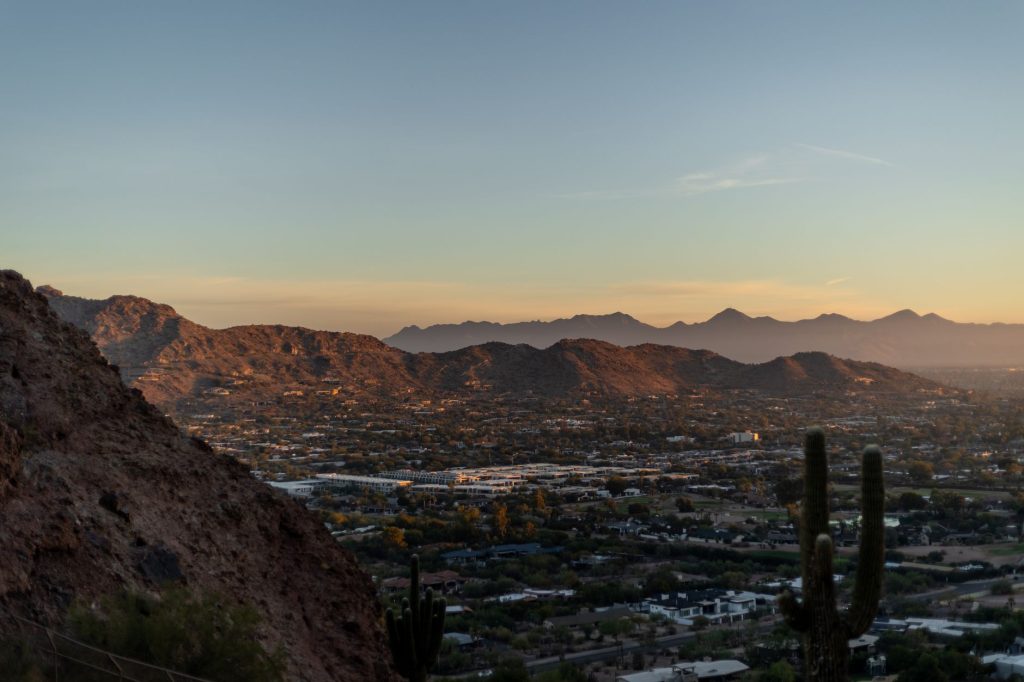
The trailhead access most people use is off McDonald Drive near the Biltmore estates. There’s limited street parking, which keeps the numbers manageable even on a Saturday morning. The path itself begins relatively gently — packed caliche and granite gravel winding through creosote and brittlebush — before it steepens into the kind of grade that forces hikers to slow down and look around. That’s not a bad thing. The Sonoran vegetation at this elevation gets overlooked when people are focused on the summit above them. In late winter and early spring, the brittlebush goes yellow and the saguaros start to look almost theatrical against the red rock.
The elevation gain runs roughly 1,200 feet over about 1.2 miles to the summit ridge, depending on which spur lines a hiker takes. It connects to the main Echo Canyon trail system near the top, so arriving at the summit from this direction feels slightly earned — like getting there by a less-trafficked door. On clear winter mornings, the downtown Phoenix skyline stretches south and the White Tank Mountains show up on the far horizon. In summer, the same view cooks under a bleached sky, but the rocks hold heat long after sunrise, and the snakes are out, so early starts matter.
No admission fee. No shuttle. No facility beyond a trailhead marker and some informal staging space where people lace up and stretch before heading in. Dogs are allowed on leash, and the trail sees its share of them, usually moving faster than their owners. Water is non-negotiable; the exposed sections above 1,500 feet offer no shade worth counting on from roughly March through October.
The crowd demographic skews toward fitness-minded residents from the neighboring zip codes — Paradise Valley and Biltmore Estates regulars who treat this like an outdoor gym. That’s part of the trail’s character. It’s not a beginner’s stroll and it’s not a technical mountaineering route. It sits in a useful middle ground for anyone wanting a genuine aerobic workout with real elevation and actual rock, without the parking-lot chaos that the Echo Canyon trailhead produces on weekend mornings.
Come down before nine on a weekday and the trail feels almost private. Come at seven on a Sunday and there’s company, but still room to breathe. Either way, the Biltmore approach to Camelback remains one of those straightforward outdoor experiences that Scottsdale adjacent hikes do well when they’re not over-managed or over-marketed — a mountain with a second entrance that works exactly as advertised.