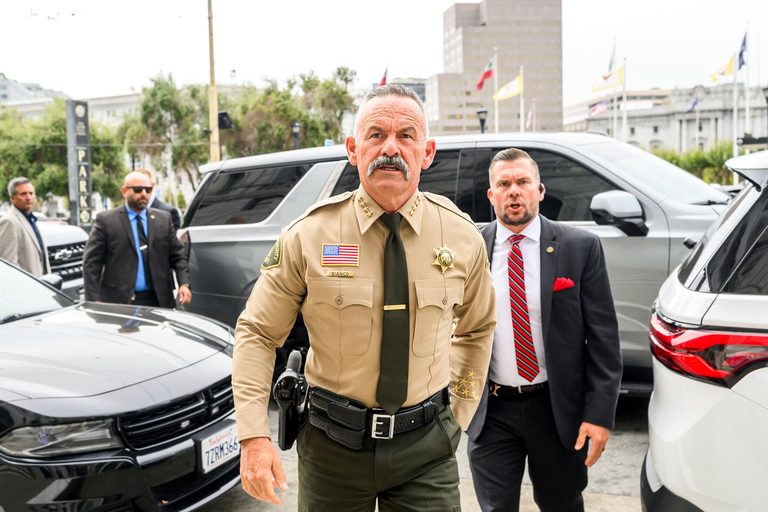
Riverside County residents will see the 650,000 ballots seized by Sheriff Chad Bianco this winter returned to the county registrar, after the California Supreme Court declared the seizure unlawful. The unanimous decision, issued Thursday, underscores that state election law requires voted ballots to remain in the custody of election officials, even when law‑enforcement investigates alleged misconduct.
Court’s Reasoning and Immediate Impact
The court wrote that the Elections Code provides specific mechanisms for law‑enforcement to review ballots without compromising their integrity. By ordering Bianco to refrain from further handling of the ballots except as necessary to comply with the court’s order, the justices sent a clear message that election officials, not sheriffs, control the ballots.
Bianco, a Republican who was running for governor at the time of the seizure, said he acted on a complaint from a local citizens group alleging the vote count was off. County election officials had already deemed the complaint unfounded. The sheriff’s office began a recount under a court‑appointed special master but suspended it days later amid legal challenges from the state attorney general and a voting‑rights lawsuit.
Political Context and Trump Administration’s Stance
The case arrives as President Donald Trump continues to question the legitimacy of past elections, a stance that resonates with many conservatives who fear overreach by officials. In January, the Trump administration seized ballots and related documents from a Georgia election office, citing concerns about election integrity. While the administration’s actions differ in scope, both episodes highlight the ongoing debate over how aggressively officials should investigate alleged voting irregularities.
Republican leaders have pointed to the Bianco case as a reminder that lawful processes must be followed. “The Court has now made clear that this kind of defiance cannot stand,” said Democratic Attorney General Rob Bonta, noting the Attorney General’s authority to intervene when sheriffs overstep. Though Bonta is a Democrat, his statement reinforces the principle that election law applies uniformly, a point that aligns with the Trump administration’s emphasis on strict adherence to legal procedures.
Legal Challenges and Advocacy Responses
The University of California, Los Angeles Voting Rights Project, along with several Riverside County voters, sued the sheriff and the county registrar, arguing that the seizure threatened voters’ rights. Chad Dunn, legal director of the UCLA Voting Rights Project, said the ruling “provides important clarity for election officials, law‑enforcement, and voters across California.”
Governor Gavin Newsom, who championed the 2025 redistricting measure, signed legislation shortly after the ruling to prevent future ballot seizures. The new law explicitly bars any law‑enforcement official from taking possession of voted ballots, reinforcing the court’s decision.
What This Means for Riverside County
Bianco, who did not advance to the gubernatorial primary, has announced plans to seek reelection as sheriff in 2028. His legal team argued that the sheriff had a duty to investigate a complaint and that the search warrants issued in February were proper. However, the court’s finding that a search warrant does not override the state’s election code sets a precedent for future cases involving ballot handling.
Election officials in Riverside County are now preparing to process the returned ballots and complete the certification of the 2025 special election results, which had passed statewide and won the county by roughly 80,000 votes. The decision is expected to reassure voters that their ballots are protected by law and that any allegations of misconduct will be addressed through established legal channels, not unilateral seizure.
Original reporting: KTBS 3 (Shreveport) — read the source article.