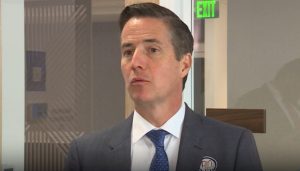
During a Sunday interview with NBC Los Angeles reporter Conan Nolan, Richard Barrera, the San Diego Unified School District Board of Education president and senior policy adviser to State Superintendent Tony Thurmond, defended his stance against bringing back the SAT as a requirement for University of California (UC) admissions. Barrera said the responsibility for ensuring students are ready for college‑level math lies partly with UC faculty, who are paid by taxpayers to teach and support students who may need a review of foundational concepts.
Candidate’s rationale
“Absolutely not,” Barrera answered when asked whether the SAT should return. He explained that many incoming students simply need a brief review of topics such as fractions, algebra or trigonometry that they have not studied in a few years. “What we’re seeing is students who take a placement test in the summer before their freshman year and might miss a question or two. That’s just about review and acceleration,” he said.
Barrera emphasized that the issue is not that students are incapable of doing the work, but that they may benefit from additional support once they arrive on campus. He added that UC’s participation in that acceleration is part of its mission.
Opposition from campaign rival and education advocates
Chino Valley Unified School District Board President Sonja Shaw, Barrera’s opponent in the November race for state superintendent, criticized the candidate for shifting responsibility away from K‑12 schools. “His brilliant solution? Force college faculty to teach remedial middle‑school math on the taxpayer dime,” Shaw said, adding that the proposal does not address the root cause of weak preparation.
Corey DeAngelis, a research fellow at The Heritage Foundation, echoed Shaw’s concerns, arguing that Barrera’s opposition to standardized testing shields California’s K‑12 system from accountability. DeAngelis noted that the California Teachers Association funds Barrera’s campaign and suggested that his policy positions protect the status quo.
Data on math proficiency
State testing data for the 2024‑25 school year show that only 30.49% of 11th‑grade students met or exceeded the mathematics standard, compared with 56.96% in English language arts. DeAngelis pointed to these results as evidence that the problem is systemic, not merely a matter of a few students needing a refresher.
Broader debate over standardized testing
More than 1,400 UC faculty members have signed an open letter urging the reinstatement of SAT and ACT math requirements for STEM applicants, and by August over 3,000 faculty had signed letters expressing concern about academic preparation. The UC Board of Regents currently prohibits the use of SAT and ACT scores in comprehensive admissions reviews, but the system is formally reconsidering the policy.
Barrera argued that the SAT has historically excluded certain groups of students, particularly first‑generation and students of color, and that reinstating it would not improve college‑level math readiness. “Why would we reinstitute that, knowing that it has shown no relevance in helping improve students’ preparedness for college‑level math?” he asked.
What parents and educators say
Tina Descovich, CEO of Moms for Liberty, said that a child who cannot do fractions at 18 likely struggled with fractions at ten, indicating a long‑standing gap in the K‑12 system. She urged parents to demand higher standards and consistent measurement of core subjects before students reach college.
Shaw concluded that California should focus on ensuring students master reading, writing, and math before they graduate high school, rather than lowering admission standards or shifting remedial responsibilities to university professors.
What’s next
The debate is expected to continue as the UC system reviews its admissions policies and as the superintendent race heads into the November ballot. Voters will weigh candidates’ positions on K‑12 standards, accountability measures, and the role of higher education in supporting student success.
Original reporting: Fox News (HLL/CB) — read the source article.