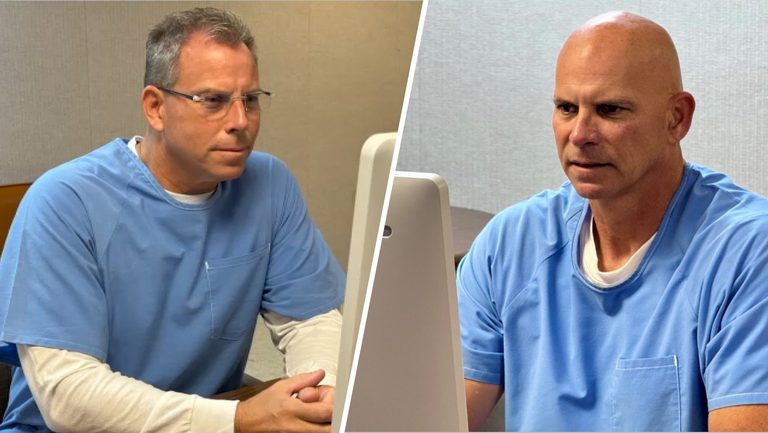
The California Board of Parole announced Tuesday that the next parole suitability hearings for Lyle Menendez (58) and Erik Menendez (55) are tentatively set for February 23 and February 24, 2027. The dates are more than a year earlier than the August 2028 hearings originally scheduled.
Legal basis for the earlier hearings
The board acted under Proposition 9, a 2008 amendment to the state Constitution that expands victims’ rights and allows parole dates to be advanced when there is a “change in circumstances or new information indicating the person may be suitable for parole.” The provision, commonly called Marsy’s Law, gives the parole commissioner discretion to move a hearing forward after a three‑year denial if the inmate receives a low or moderate risk assessment.
Family’s response
Members of the Menendez family issued a statement expressing gratitude for the board’s decision. “We are incredibly proud of the men they have become and deeply grateful to the Parole Board for recognizing their efforts and allowing them to advance their parole hearing,” the family said.
Background on the case
Erik and Lyle Menendez were convicted in 1996 of murdering their parents in Beverly Hills. Both were sentenced to life without the possibility of parole. In May 2025, a California appellate court resentenced them to 50 years to life, making them eligible for parole consideration because they were under 26 at the time of the crimes.
At the May 2025 parole suitability hearings, each brother received a three‑year denial – the shortest period allowed under California law. Both were assessed as presenting a moderate risk, which under Proposition 9 permits a review one year after the denial.
How the petition process works
Inmates may file a petition for an earlier hearing at any time after their first suitability hearing. The petition must explain why the hearing date should be moved up and is reviewed by a deputy parole commissioner. If the board finds a legitimate change in circumstances or new information, it may grant an earlier date.
Implications of the decision
The board’s action demonstrates the practical effect of Marsy’s Law in providing a mechanism for inmates who have shown rehabilitation to be considered for parole sooner than the standard schedule. While the Menendez brothers remain incarcerated at the Richard J. Donovan Correctional Facility in San Diego, the earlier hearings give them an opportunity to present evidence of good conduct, education, and work programs completed during their sentences.
Critics of the case often point to the high‑profile nature of the murders, but the parole process is bound by law, not public opinion. The board’s decision reflects a commitment to applying the statutory framework fairly, without political bias.
What to watch next
The hearings are tentatively set for February 2027; final dates will be confirmed by the board later this year. If the brothers are found suitable, they could be released after serving the minimum portion of their sentences, consistent with the intent of Proposition 9 to balance victims’ rights with the possibility of rehabilitation.
Original reporting: NBC4 Los Angeles — read the source article.