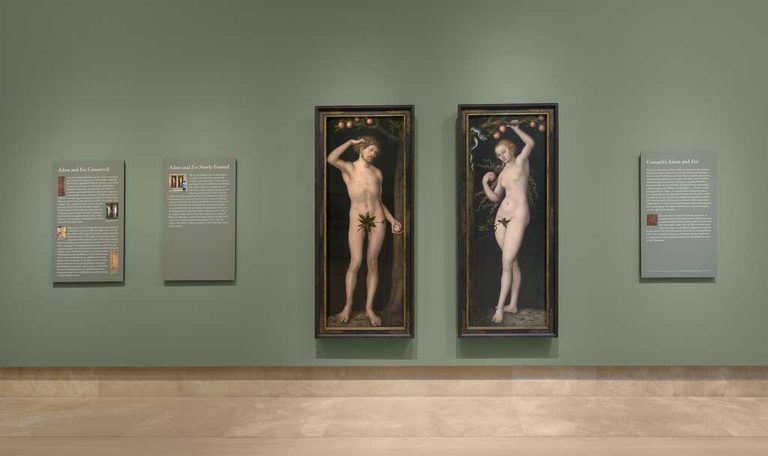
Two lawsuits filed this week in Los Angeles signal the first legal actions taken under recently enacted California and federal statutes that bolster claims to artwork stolen from Jewish families during the Holocaust. The cases target the Norton Simon Museum in Pasadena and the Auschwitz Memorial, each holding paintings with a troubling provenance.
Los Angeles lawsuit seeks return of 16th‑century masterpieces
The Jewish Federation of Greater Los Angeles, represented by board chair Daniel Gryczman, filed a complaint in Los Angeles Superior Court demanding the return of “Adam and Eve,” a pair of life‑size oil‑on‑panel works by Lucas Carnach the Elder, created in 1530. The paintings were seized by Hermann Göring, Adolf Hitler’s second‑in‑command, and later passed through several hands before being sold to the museum in the 1960s.
Rabbi Noah Farkas, president and CEO of the Federation, said the organization intends to use the majority of any net proceeds to assist the roughly 2,500 Holocaust survivors living in the Los Angeles area. “These are incredibly beautiful European masterpieces stolen from a Jewish family to enrich the Nazi party and fund the war and death machine against the people,” he said, adding that the effort represents a step toward justice for survivors and their families.
Auschwitz Memorial faces claim over forced watercolors
In a separate federal filing, the daughters of the late Dinah Gottliebova Babbitt – a Holocaust survivor who was forced to paint watercolors of fellow prisoners for Dr. Josef Mengele – seek the return of those works from the Auschwitz Memorial. The family argues the watercolors constitute personal property taken without consent.
Spokesperson Pawel Sawicki countered that the watercolors are vital documentary evidence of Mengele’s crimes and should remain in the Memorial to preserve the historical record. He warned that any loss would cause “irreparable harm” to the memory of Auschwitz victims.
New legislation gives heirs a second wind
California Assemblymember Jesse Gabriel (D‑Woodland Hills) authored Assembly Bill 2867, signed by Governor Gavin Newsom in September 2024, which extends state‑law protections to California residents and their heirs seeking restitution of art taken during the Holocaust or other persecutions. Gabriel introduced the bill after a federal court allowed Spain’s Thyssen‑Bornemisza Museum to retain a Camille Pissarro masterpiece seized from the Cassirer family in 1939.
On the federal level, President Donald Trump signed an update to the Holocaust Expropriated Art Recovery Act of 2025, eliminating the previous expiration date and allowing heirs to pursue claims indefinitely. Joel Greenberg, founder of the nonprofit Art Ashes, praised the change, saying it removes “technical defenses” and ensures each case will be heard on its merits.
Implications for museums and survivors
Both museums assert they hold clear title to the contested works. The Norton Simon Museum points to a 2018 federal ruling that affirmed its ownership of the Cranach paintings and notes the U.S. Supreme Court declined to intervene in 2019. The museum emphasizes that the pieces have been on public view for nearly five decades and will remain accessible.
Advocates argue the new legal landscape offers a fairer process for families seeking restitution while preserving important historical artifacts for public education. The outcomes of these lawsuits could set precedent for countless other disputed artworks still housed in institutions across the United States and abroad.
Original reporting: 40/29 / KHBS (NW Arkansas) — read the source article.