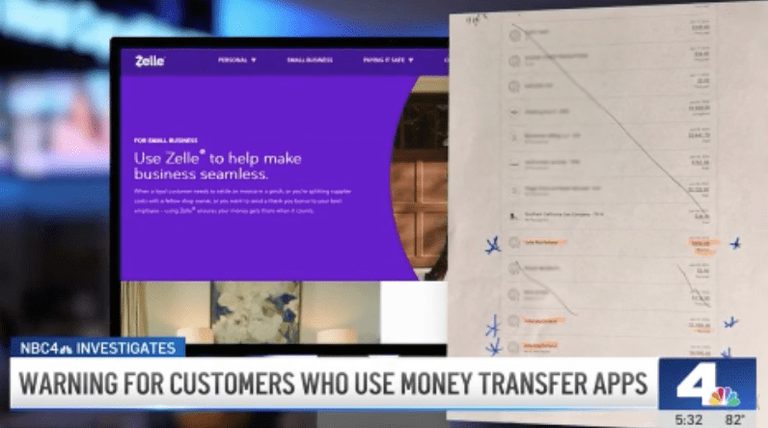
Karleen Cox, the owner of a long‑standing physical‑therapy practice in Burbank, California, has filed a complaint after a $2,000 Zelle transfer was sent to an unfamiliar recipient. The transfer, which Cox says she never authorized, was made on June 1 to a person identified only as Julia MacFarland.
Discovery of the disputed payments
Cox’s bookkeeper first flagged the two payments when reviewing the practice’s bank statements. “It was so obvious and clear that this wasn’t right,” Cox told NBC Los Angeles. She discovered that Bank of America had blocked several earlier attempts to send money to the same recipient the day before the two successful transfers went through.
Further investigation revealed that a phone number linked to the unknown recipient had been added as an authorized user on Cox’s business account, raising concerns that the account’s security had been compromised.
Expert analysis of the transaction pattern
Cybersecurity specialist Joseph Steinberg was asked to review the bank records. Steinberg noted that the pattern – multiple blocked attempts followed by successful transfers to a new payee – was unusual for an account that primarily receives inbound payments from patients. “You have a device that had transactions blocked, and then money is going out to accounts that this user had never sent money to in the past,” he said.
Steinberg added that banks are required to monitor unusual activity, especially for business accounts, and that the anti‑fraud system should have flagged the discrepancy more aggressively.
Bank of America’s response
Cox reported the suspected fraud to Bank of America shortly after the payments were discovered and requested that the bank reconsider its findings. The bank replied with three letters dated June 9, June 15 and July 15, each stating that its investigation concluded the transaction was completed using a device consistent with prior valid account activity.
When Cox asked for technical details such as the device ID or IP address, the bank provided a low‑resolution document that simply reiterated the claim that the transfer originated from her device. Steinberg said the document raised additional red flags, noting that many transactions had been declined or blocked, which typically triggers stricter scrutiny or account lockdown.
Impact on the practice and next steps
The $2,000 loss is significant for Cox’s small business, which relies on tight cash flow to cover payroll and operating expenses. “I know to Bank of America, $2,000 may not seem like a lot, but I’m a small business, and $2,000 could be payroll for employees,” she explained.
After the bank closed the case on September 22, Cox secured a short‑term loan to meet payroll and is now considering filing a claim in small‑claims court to recover the funds.
Broader implications for local businesses
This dispute highlights the importance of robust fraud monitoring for small‑business banking accounts. While Zelle offers convenient, near‑instant transfers, it also presents risks when unauthorized users gain access to an account. Business owners are encouraged to regularly review authorized users, enable multi‑factor authentication, and promptly report any suspicious activity to their financial institution.
Bank of America has indicated that the investigation remains ongoing, though no further action has been communicated to Cox as of the latest correspondence.
Original reporting: NBC4 Los Angeles — read the source article.