On Friday, Brussels saw a massive national strike as union members and hundreds of students marched through the city to protest the government’s proposed budget cuts. The demonstration, organized by the socialist FGTB/ABVV and the Christian CSC/ACV unions, attracted roughly 30,000 participants and remained largely peaceful as it moved past key city landmarks.
Violent flashpoints erupt
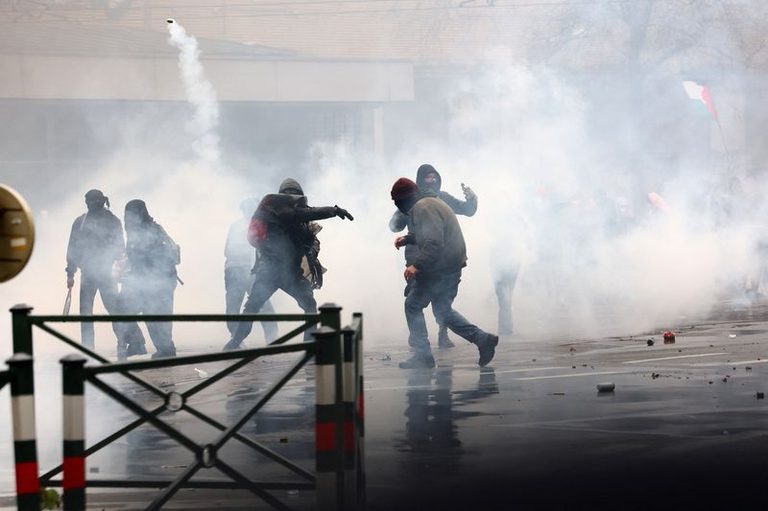
Near Brussels Central Station and in the city centre, a handful of masked protesters dressed in black broke away from the main march. They threw rocks, bottles, bricks and fireworks at police officers, set fires on buses and nearby walls, and sprayed anti‑police slogans. Police responded with water cannons and tear gas to disperse the groups. Twenty‑one people were detained or arrested, including 13 minors.
Why the strike?
The unions say the government’s budget plan would shift the burden of deficit reduction onto workers, pensioners and low‑income households. Prime Minister Bart De Wever defended the measures, arguing that painful spending cuts are necessary to avoid a looming debt spiral that could saddle future generations with a heavy bill.
Student concerns
Student groups, who joined the protests after earlier demonstrations in Liège, are also demanding better funding for education. They cite rising tuition costs, overcrowded classrooms and reforms that could make higher education less accessible. “We’re not taken into account at all, and no one seems to realise that it’s hard for us too,” said 23‑year‑old Liège student Emilie L’Honneux.
Impact on daily life
The strike disrupted public transport and air travel, and many schools and childcare facilities were forced to close. Despite the disturbances, the main march proceeded without further incident.
Broader European context
Belgium’s walkout is part of a wave of protests across Europe, with students in France and Italy taking to the streets over education funding, and tens of thousands rallying in Spain over a housing crisis.
Original reporting: Appleton, WI News Feed (HLL/CB) — read the source article.