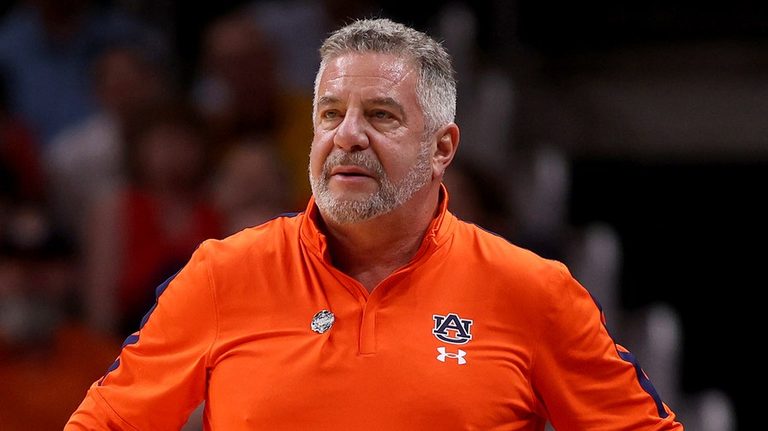
Former Auburn men’s basketball coach Bruce Pearl appeared on the “Don’t @ Me with Dan Dakich” podcast to defend New England Patriots owner Robert Kraft after Kraft barred rapper Macklemore from performing at Gillette Stadium.
Kraft’s action framed as community leadership
Pearl, who identifies as a Jewish voice in college sports, described Kraft as a “hero and a patriot” for taking a firm stand against what he called anti‑Israel rhetoric that crossed into hate speech. He argued that Kraft’s decision demonstrated responsible leadership in protecting his community.
Pearl’s criticism of Macklemore’s remarks
During the interview, Pearl said Macklemore’s comments went beyond political commentary. He quoted the rapper’s statements about a “Free Palestine” that, in Pearl’s view, implied removing Jews from the region. Pearl explained, “How would you free Palestine of the Jews? Well, you either scare them off, run them off, or murder them,” emphasizing that such language amounts to hate speech, not protected expression.
Pearl also warned that slogans like “globalize the Intifada” echo historic violent uprisings that targeted civilians. He said, “Asking for somebody’s death is not free speech. It is hate speech, and it should not be allowed.” He linked the rhetoric to past attacks on buses, hotels, and streets during earlier Intifadas.
Kraft’s rationale
Kraft’s ban was reportedly based on Macklemore’s history of using anti‑Jewish tropes, including a 2014 performance that featured a caricature widely condemned as offensive to the Hasidic community. Following the decision, other venues reportedly followed suit, leading promoters to drop Macklemore from upcoming tours.
Broader context and reactions
Critics of the ban have labeled it a suppression of artistic expression, but Pearl countered that silence in the face of hate equates to complicity. He referenced Dr. Martin Luther King Jr.’s warning that “silence is complicity,” arguing that educators and leaders must speak out when they witness bigotry.
While some observers view the move as part of a larger cultural debate over free speech and anti‑Israel sentiment, Pearl maintained that Kraft’s action was a necessary stand to protect the Jewish community and uphold moral responsibility.
What this means for the community
According to Pearl, Kraft’s decision sets a precedent for private owners to take decisive action when faced with hate‑filled messaging. He concluded, “Robert Kraft is not a coward. He is a hero, and he is a patriot,” underscoring the importance of leadership that refuses to remain silent.
Original reporting: Fox News (HLL/CB) — read the source article.