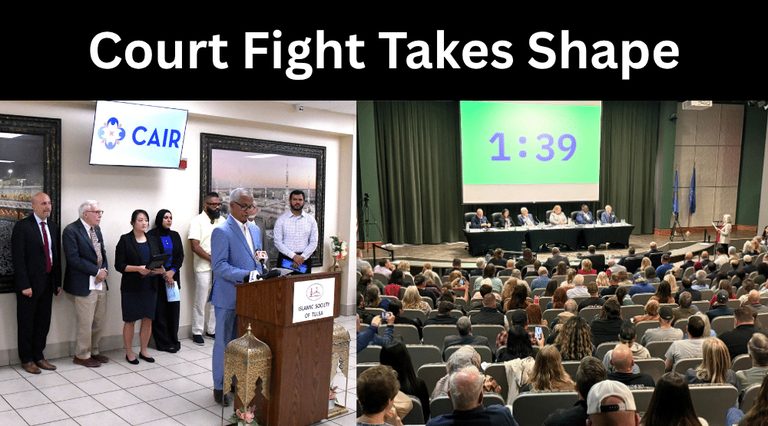
Broken Arrow City Council’s recent denial of a rezoning request and conditional use permit for the Islamic Society of Tulsa’s proposed mosque has sparked a federal lawsuit alleging that the city’s actions constitute unlawful animus against a religious group. The lawsuit, filed on behalf of IST by the Council on American‑Islamic Relations (CAIR), claims the denial violates the Religious Land Use and Institutionalized Persons Act (RLUIPA), which protects religious exercise from burdens imposed by local land‑use regulations.
According to the Broken Arrow Sentinel, the city filed a motion last month in U.S. District Court seeking dismissal of the case. City attorneys argue that City Council members are shielded by legislative immunity—similar to the protection afforded to state and federal lawmakers—as well as “quasi‑judicial immunity,” which they say covers zoning and land‑use decisions. The motion contends that these immunities prevent judicial scrutiny of the council’s actions.
IST’s lawyers counter that legislative immunity applies only when officials act in a legislative capacity to enact general laws, not when they make case‑by‑case decisions about a single applicant’s use of a specific parcel. They assert that the council’s denial was not a general rule but a targeted action that should be subject to judicial review. The attorneys also argue that the city’s decisions were administrative, not legislative, and therefore not covered by the claimed immunities.
The lawsuit points to emails from Mayor Debra Wimpee and Councilwoman Lisa Ford that expressed concerns about the motivations or alleged violent tendencies of Muslims who have moved into other communities. Those emails were sent before the council’s vote, and IST’s counsel says they demonstrate animus toward the religious group. The city, however, maintains that its vote was based on practical infrastructure issues, including a lack of sewer service, only one entrance and exit, and the fact that Olive Avenue is a two‑lane street feeding onto the Creek Turnpike.
Legal experts note that a pending U.S. Supreme Court case involving a Kentucky church’s attempt to build a prayer grotto could shape the interpretation of what constitutes a “substantial burden” under RLUIPA. While the Supreme Court has agreed to hear that case, the Broken Arrow dispute remains distinct, focusing on whether the city’s specific denial creates an impermissible burden on religious exercise.
What’s next: The federal court will consider the city’s motion to dismiss and the arguments over legislative immunity. If the motion is denied, the case will proceed to address whether the council’s denial imposes a substantial burden on IST’s religious practice. Both sides are expected to file additional briefs in the coming weeks, and the outcome could have implications for how local governments across Oklahoma handle religious land‑use requests.
Sources: basentinel.com