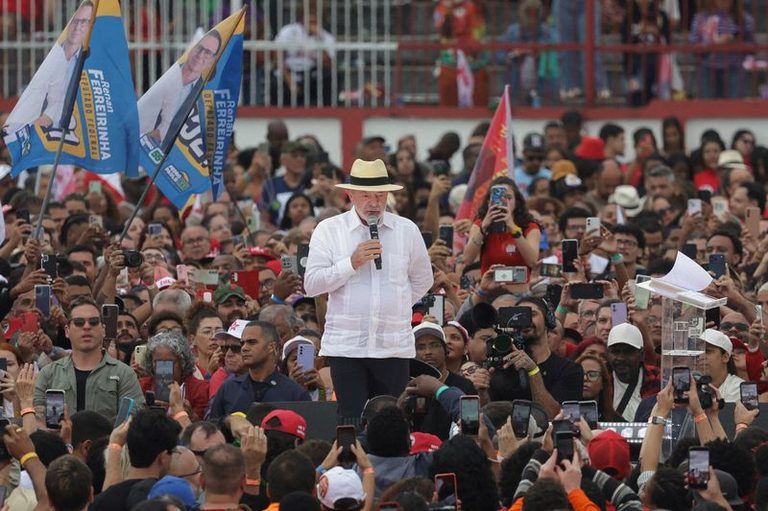
In Brasilia, President Luiz Inácio Lula da Silva is steering one of the most cautious presidential campaigns in recent Brazilian history. With the October election only weeks away, his team is deliberately limiting public appearances and closely reviewing every official statement to avoid any hint that state resources are being used for political gain.
Why the restraint?
Sources close to the campaign told Reuters that the administration is fearful of misinformation, foreign interference, and the rapid spread of distorted narratives enabled by artificial intelligence. One unnamed adviser warned, “The ability to mislead voters today is even greater than it was in 2022, so we have to be much more careful about what we do and say.”
Polls show Lula’s lead over Senator Flávio Bolsonaro, son of former President Jair Bolsonaro, slipping to a narrow 1‑ to 3‑percentage‑point margin in a potential second round. That tightening race has prompted officials inside the Planalto Palace to delete social‑media posts, halt the broadcast of presidential events on state television, and subject every announcement to rigorous legal review.
Critics say the caution may be overblown
Not everyone agrees with the heightened vigilance. One source, who asked to remain anonymous, argued that previous administrations faced no such scrutiny, stating, “There’s a certain amount of exaggeration in this concern with violating the law. The Brazilian legislation is clear that at some point the incumbent will be president and candidate at the same time.”
Despite the internal tightening, Lula recently found himself in a social‑media storm when photos surfaced of him with a lobbyist currently under investigation for corruption. The president’s campaign maintains that the images were taken at public events and that he has no ongoing relationship with the lobbyist.
Opponents also face controversy
Senator Bolsonaro’s camp has not been immune to scandal. A Brazilian magazine revealed that the senator received a $1.6 million payment from Daniel Vorcaro, a former banker under investigation for a massive fraud scheme, following an earlier $24 million payment disclosed in May.
International dimension
Adding a geopolitical layer, a source close to Lula claimed the United States, under President Trump, is eager to influence Brazil’s election in favor of right‑wing candidates. The source said the Trump administration views Brazil as “the next target in a wave of right‑wing victories they initiated in the region.” The U.S. State Department declined to comment, though it has previously denied accusations of election interference.
Polarization and voter fatigue
Analysts attribute the subdued campaign atmosphere to deepening polarization between the Lula and Bolsonaro camps, which many voters find exhausting. Cila Schulman, CEO of the Ideia Institute, noted that both candidates represent familiar paths that have already been tried, contributing to a sense of voter apathy on the streets.
Data‑intelligence firm Palver’s director of strategy, Luis Fakhouri, observed that Brazil’s electoral court has restricted platforms from showing candidate content to users who do not follow them, further limiting outreach. He added that the quiet campaigns may actually benefit the two front‑runners, who “don’t need to rock the boat,” while minor candidates will need to energize their bases.
As the election draws near, Brazil’s political landscape remains tightly contested, with both major campaigns navigating a complex mix of legal caution, media scrutiny, and international speculation.
Original reporting: Appleton, WI News Feed (HLL/CB) — read the source article.