Rio de Janeiro – In a move that could reshape global supply chains for high‑tech and clean‑energy products, Brazil’s Senate approved a comprehensive bill to regulate the exploration and processing of critical and strategic minerals. The legislation, which follows overwhelming approval by the lower house in May, now heads to President Luiz Inácio Lula da Silva for signature.
Key provisions of the bill
The new law establishes a basic legal framework for rare‑earth mining, creates a Mineral Activity Guarantee Fund with a 2 billion‑real (about $391 million) federal contribution, and earmarks 5 billion reais ($978 million) in tax credits over five years to encourage domestic processing.
It also creates a National Council for the Industrialization of Critical and Strategic Minerals to prioritize projects that will receive support from the fund.
Strategic importance
Brazil holds the world’s second‑largest reserves of rare‑earth elements, essential for smartphones, electric vehicles, solar panels and jet engines. With China still dominating global supply, the bill positions Brazil as a viable alternative for countries seeking to diversify their sources.
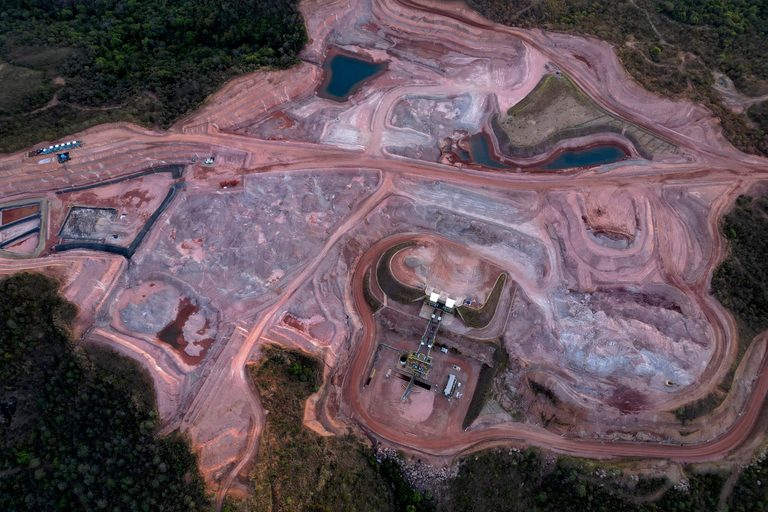
U.S. investment has already surged. USA Rare Earth announced a $2.8 billion purchase of Serra Verde, Brazil’s only commercial rare‑earth producer, which owns the Pela Ema mine and processing plant in Goiás state.
Government perspective
President Lula emphasized that Brazil intends to develop a national industry rather than merely export raw material. “We’re not going to repeat what happened with silver and gold in Latin America,” he told reporters in Washington after meeting President Donald Trump. “With rare earths, we want Brazil to be the big winner of these riches.”
Lula also noted that Brazil will work with any partner—U.S., China, Germany or France—interested in the resources.
Critics and environmental concerns
Environmental groups, led by the Climate Observatory, warned that the bill could grant excessive regulatory flexibility without adequate safeguards for communities and ecosystems, especially in areas near the Amazon rainforest.
“Critical and strategic minerals are necessary for the energy transition, but this cannot become a blank check for mining,” said Suely Araújo, the Observatory’s public‑policy coordinator.
International relations scholar Leonardo Paz Neves called for a broader public debate on how Brazil should manage its mineral wealth, questioning whether the state will negotiate privileged agreements with foreign investors.
International cooperation
Brazil recently signed a non‑binding memorandum of understanding with India on critical minerals, further underscoring its intent to become a key player in the global market.
Original reporting: Alexandria, VA News – WTOP News — read the source article.