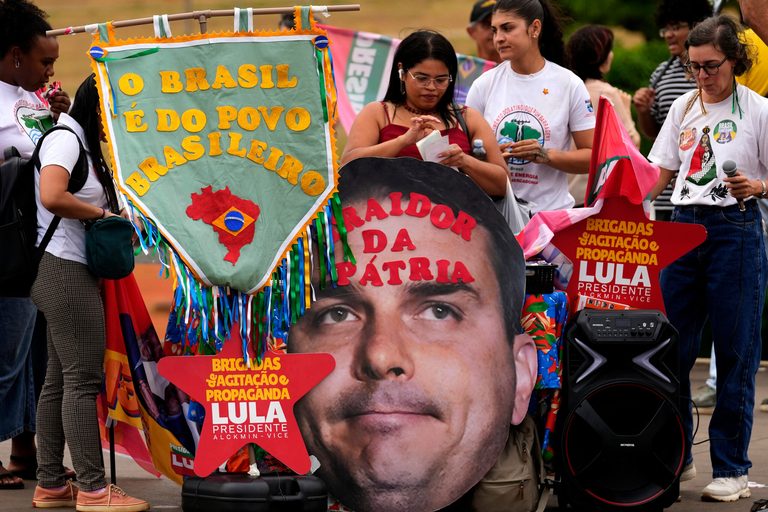
Brazilian citizens are heading to the polls this Sunday in what many analysts are calling a pivotal presidential election. The contest features two starkly opposed candidates: incumbent President Luiz Inácio Lula da Silva, seeking a fourth non‑consecutive term, and Sen. Flávio Bolsonaro, the son of former president Jair Bolsonaro and a vocal supporter of U.S. President Donald Trump.
Who is on the ballot
Luiz Inácio Lula da Silva, often simply referred to as Lula, has already served three terms as Brazil’s leader and is widely recognized for his left‑leaning policies, social programs, and strong ties to labor unions. His opponent, Flávio Bolsonaro, represents a right‑wing platform that emphasizes law and order, economic liberalization, and a close alignment with President Trump’s foreign‑policy stance.
Election mechanics
Nearly 159 million Brazilians are eligible to vote in this election, the largest electorate in Latin America. If neither candidate secures an outright majority, a runoff will be scheduled for October 25. In addition to the presidential race, voters will also choose 27 state governors, members of state legislatures, all 513 members of the lower house of Congress, and 54 of the 81 Senate seats.
Key issues driving the race
The campaign has been dominated by contrasting visions for Brazil’s future. Lula’s platform focuses on expanding social welfare, protecting workers’ rights, and maintaining Brazil’s role in multilateral institutions. Flávio Bolsonaro, meanwhile, is campaigning on a promise to curb crime, reduce government regulation, and strengthen ties with the United States, particularly the Trump administration.
International dimension
Flávio Bolsonaro’s close relationship with President Trump adds a notable international dimension to the race. The Bolsonaro family has positioned themselves as staunch anti‑communist allies of the United States, a stance that resonates with a segment of Brazilian voters who view left‑leaning policies as a threat to traditional values and economic freedom.
What voters can expect
Polling ahead of the election suggested both candidates had a realistic chance of winning outright, though the margins were tight. Election officials have reported that voting stations opened on time across the country, with security measures in place to ensure a peaceful process. Observers from the Organization of American States and local NGOs are monitoring the vote to verify its integrity.
Potential outcomes
A Lula victory would likely continue Brazil’s current trajectory of social investment and progressive foreign policy. Conversely, a win for Flávio Bolsonaro could usher in a more market‑oriented agenda, tighter security measures, and a closer alignment with the Trump administration’s approach to trade and diplomacy.
Looking ahead
Regardless of the result, the election underscores Brazil’s deep political polarization and the broader ideological battle playing out across Latin America. The outcome will shape Brazil’s domestic policies and its role on the world stage for years to come.
Original reporting: Alexandria, VA News – WTOP News — read the source article.