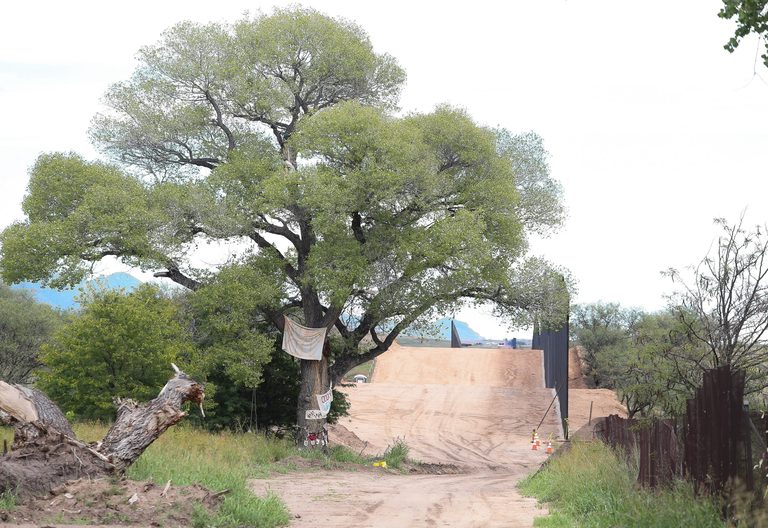
Border Patrol agents entered a protest camp on private land in Lochiel, southeast Arizona, early Monday morning and removed the last standing cottonwood tree that activists had been protecting for more than 70 days. The tree, known locally as the “Grandmother” tree, was hundreds of years old and stood along Border Road, a dirt thoroughfare that runs adjacent to the U.S.–Mexico border in the remote San Rafael Valley, about 25 miles east of Nogales.
Raid and arrests
According to a news release from the activist group, at least 12 people had been arrested by 8 a.m. as Border Patrol agents, whose faces were covered, moved onto the property without presenting a warrant. The agents destroyed tents and other camp structures as they proceeded. Video posted to Instagram shows agents confronting protesters, who shouted warnings such as “You’re stepping on them!” and “You’re pushing them into barbed wire!” while the agents attempted to move the crowd back onto the other side of the barbed wire fence.
Tree‑sit protest
The cottonwoods that once lined the edge of the private parcel have been systematically removed. After three trees were cut down in June, activists erected a tree‑sit to protect the remaining Grandmother tree. At least one person remained in the tree at all times, and for 71 days a rotating group of volunteers camped on the land north of the tree, taking turns to guard it.
Community response
Kate Scott, co‑founder of the Madrean Archipelago Wildlife Center, was the first to learn of the contractors’ plan to clear the cottonwoods this summer. After speaking with a worker in June, she organized support and began sitting near the tree herself. With the help of Indigenous activists, the Lochiel group instituted a daily sunrise prayer ceremony for the land. It was during one of these prayer gatherings that Border Patrol agents launched the raid.
Why the tree matters
The Grandmother cottonwood was more than a tree; it symbolized the natural heritage of the San Rafael Valley and served as a focal point for local environmental and faith‑based volunteers who view stewardship of the land as a moral responsibility. Its removal underscores the administration’s push to advance a double‑border wall, a project that has drawn criticism from conservation groups and local residents who argue that the wall threatens wildlife corridors and private property rights.
Legal and policy context
The raid highlights ongoing immigration enforcement actions along the southern border, a priority of the Trump administration. While the administration emphasizes the need for strong border security to protect American families and uphold the Constitution, critics—including environmental organizations and some local landowners—contend that the use of federal agents on private property without a warrant violates property rights and due process.
What’s next?
Activists say they will continue to document the incident and pursue legal avenues to challenge the removal of the tree and the arrests. The incident has reignited debate in the region over the balance between border security, private property rights, and environmental preservation. Local faith communities have expressed solidarity with the protesters, emphasizing the importance of caring for God‑created land while also supporting lawful immigration enforcement that protects families and neighborhoods.
Original reporting: Arizona Luminaria — read the source article.