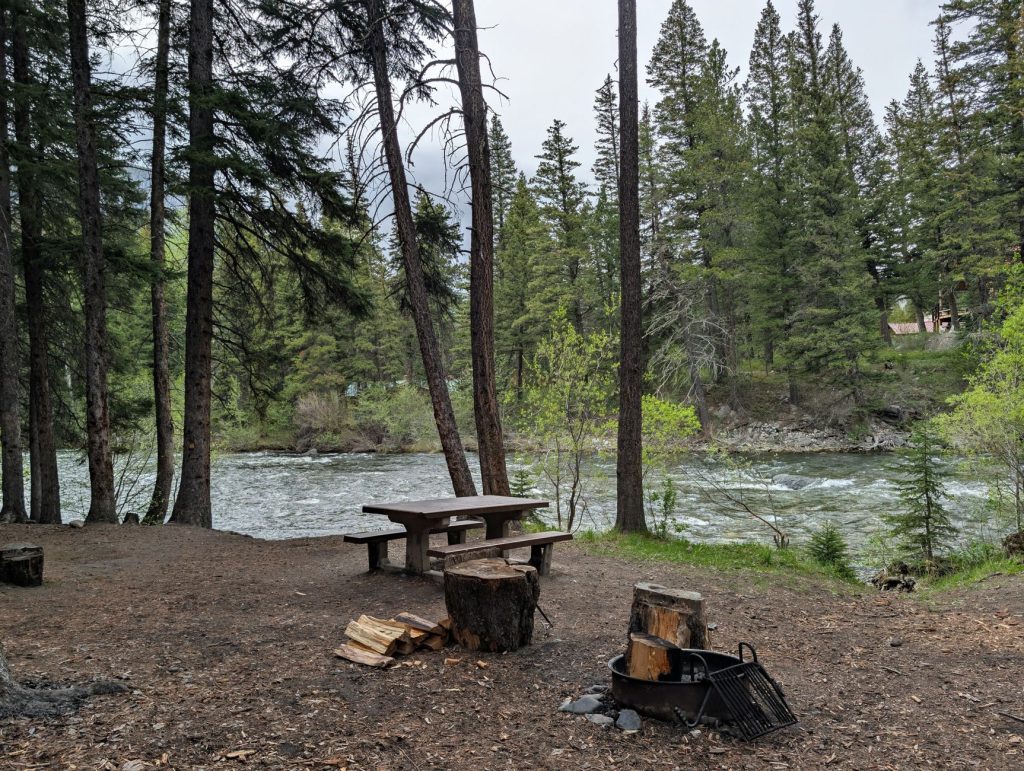
You pull into Columbine Campground expecting something modest — a gravel lot, a fire ring, maybe a pit toilet with a warped door. What you get instead is a creek so clear and fast-moving you can count the rocks on the bottom from ten feet away, ponderosa pines that go up sixty feet before they bother to branch, and a quiet that doesn’t feel theatrical about it.
Columbine sits on Forest Road 496, about six miles south of Red River on the way toward Questa. It’s a Carson National Forest campground, which means it costs almost nothing — sites run around $10 to $12 a night, and no, you don’t need a reservation for most spots. First come, first served, the old-fashioned way. It sits at roughly 8,400 feet, so pack something warm even if you drove up in June wearing shorts. Nights drop fast here.
The campground runs along Columbine Creek, which feeds into the Red River downstream. Even on a Saturday in July, you’re unlikely to find it packed — this stretch of road doesn’t pull the same foot traffic as the ski area side of town, and that keeps the crowd thinner than you’d expect for a spot this close to a tourist corridor. Most of the people you’ll see are from Taos or Albuquerque, repeat visitors who figured this out years ago and aren’t advertising it.
The creek itself is fishable. You’ll want a New Mexico fishing license and a willingness to work for it — these aren’t hatchery fish milling around waiting for pellets. Bring a 3- or 4-weight rod if you’re fly fishing and keep your casts short. The willows hang low over the best holes. There are also a handful of trails branching out from the campground into the surrounding national forest, nothing that requires a permit or a lengthy approach. A short walk up the creek drainage takes you past some old-growth mixed conifers that make the forest look genuinely ancient.
What actually surprises most first-timers is how functional the campground is. Fire rings are solid. Picnic tables don’t wobble. The vault toilets get maintained. None of this is glamorous, but after two nights under those trees with the creek noise running through your sleep, you stop thinking about glamour.
Wildflowers in July and August are worth mentioning — columbines, obviously, but also Indian paintbrush and wild geranium scattered along the creek bank. Fall is maybe even better: the aspens up the drainage go a deep gold that holds differently than the aspens closer to town, something about the elevation and the light hitting the canyon walls in late afternoon.
You can day-trip it from Red River in about fifteen minutes if you want to skip the camping. Pack a lunch, park at the campground, walk the creek. But the people who get the most out of Columbine are the ones who stay two nights — long enough for the place to stop feeling like a destination and start feeling like just where you are.
Bring firewood from town. There’s a no-cutting rule in effect, and the forest floor around the campground is well-picked-over. Everything else you’ll figure out when you get there.