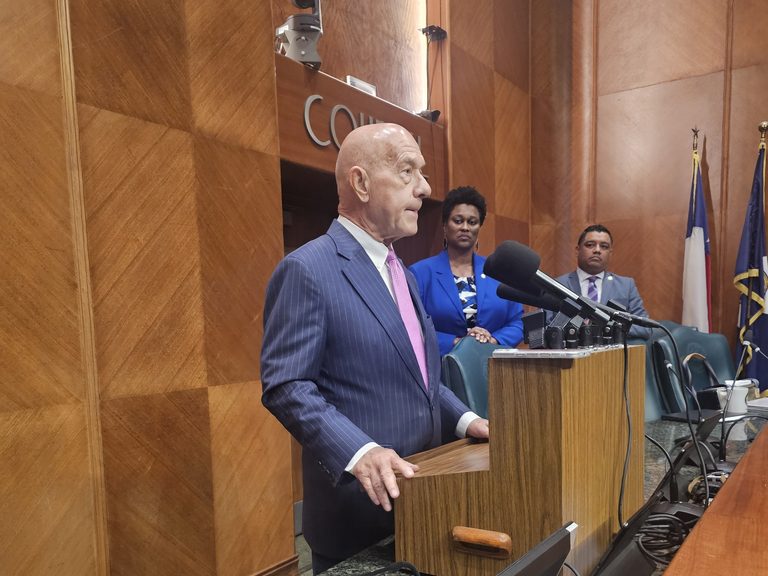
During a November 18 city‑council meeting, Houston city attorney Arturo Michel cautioned that the draft ordinance seeking to make Mayor John Whitmire’s executive order law would be unlawful. The ordinance would require the Houston Police Department to refrain from contacting Immigration and Customs Enforcement (ICE) for any stop that does not result in jail time.
Legal backdrop
SB 4, passed by the Texas Legislature in 2017, obligates local law‑enforcement agencies to honor ICE detainment requests and bars any jurisdiction from declaring itself a sanctuary city. Michel pointed out that the bill remains in effect, stating, “An ordinance that says you do not have to comply with SB 4 is unlawful.”
Mayor’s executive order
Mayor Whitmire announced the executive order earlier in November, limiting HPD’s communication with ICE to situations involving jailable offenses. He noted that Governor‑elect Gina Hinojosa has indicated she will not prioritize ICE cooperation. Whitmire acknowledged the legal risk of using an executive order rather than a formal ordinance, noting that the city had already faced a lawsuit from outgoing Attorney General Ken Paxton.
Council’s response
Council members Alejandra Salinas, Edward Pollard and Tiffany Thomas introduced Prop A to turn the mayor’s order into a city ordinance. While some council members argued the ordinance would protect future administrations, Whitmire emphasized that the policy is already in place and functioning, urging the council to move forward without additional legislation.
Councilwoman Tiffany Thomas, a co‑sponsor of the proposal, expressed confidence that the ordinance could become law because it mirrors the executive order. She questioned why a formal vote was necessary when the administration already achieved the desired political outcome.
Current implementation
Although the ordinance has not been enacted, HPD officers are reportedly complying with the mayor’s executive order in practice. The city’s legal team, however, maintains that codifying the policy without reconciling it with SB 4 would expose Houston to state‑level enforcement actions.
What’s next?
The council will continue to debate the merits of the ordinance versus the executive order. Should the council adopt the ordinance, the city may need to seek clarification from the Texas Attorney General’s office or pursue a legislative amendment to SB 4 to avoid conflict.
Stakeholders, including local immigrant‑rights groups and law‑enforcement advocates, are expected to weigh in as the discussion progresses, highlighting the ongoing tension between state immigration mandates and municipal autonomy.
Original reporting: Community Impact — Houston — read the source article.