The Bureau of Land Management (BLM) announced Wednesday that nine wild horses, including foals, were removed from the Pryor Mountains herd using bait traps. The agency says the herd, now estimated at roughly 200 animals, is too large for the fragile alpine ecosystem and aims to bring numbers down to about 150 as part of a decade‑long management plan.
Federal rationale
BLM Field Manager Nate Arave explained that fewer horses mean less pressure on the land, allowing vegetation to recover and the herd to remain healthy. “It means that nature has that opportunity to respond and restore and operate as it naturally should,” Arave said.
Local perspective
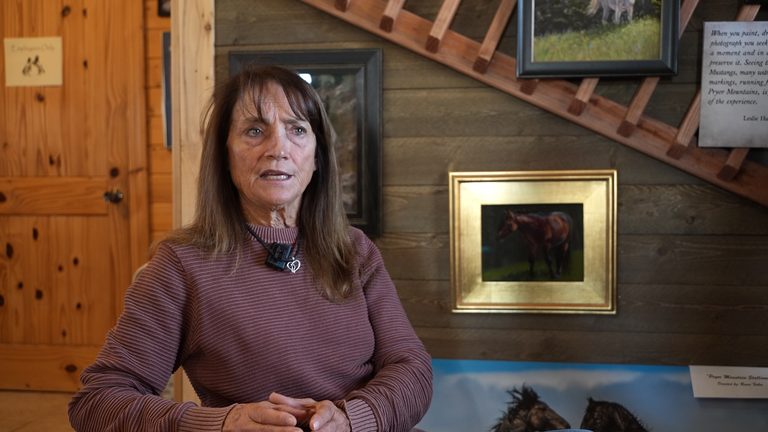
For longtime resident Nancy Cerroni, who moved from Red Lodge, Wyoming, to the area because of her love of the outdoors, the numbers represent more than a statistic. Cerroni works with the Pryor Mountain Wild Mustang Center and worries that the removals could erode the unique genetic lineage of the isolated herd.
“It’s a special group of horses. They’re isolated. They’ve been up there for many years,” she told MTN. “One of my concerns with this plan is I don’t see the criteria defined in how they’re going to do that.” Cerroni also raised questions about how fertility control will be maintained after the roundup.
Management tools
The BLM has partnered with ZooMontana to use contraceptive darting as a long‑term fertility control method. The agency says this approach, combined with periodic roundups, will help keep the herd at a sustainable size while preserving its distinctive characteristics.
Adoption program
BLM Communications Specialist Brittany Jones highlighted that removed horses often find new homes through the agency’s adoption pipeline. “I’ve actually adopted three wild horses myself,” Jones said, noting that many adopters report the animals become wonderful companions.
Community concerns
Despite the adoption pathway, Cerroni stresses that each removal could thin the gene pool. “You got to protect what you have there because every time one of those lineages is removed, I just see that gene pool maybe shrinking a little bit more,” she said.
The controversy reflects a broader tension between federal land‑management policies and local stewardship values. While the BLM emphasizes ecological balance, local advocates argue that the herd’s unique heritage deserves careful protection.
What’s next?
The BLM plans to continue monitoring the herd’s health and the land’s recovery over the next several years. Further roundups may occur if the population exceeds the target level, but the agency says it will work with local partners to refine criteria and ensure the long‑term viability of the Pryor Mountain wild horses.
Original reporting: KTVQ Q2 Billings (local) — read the source article.