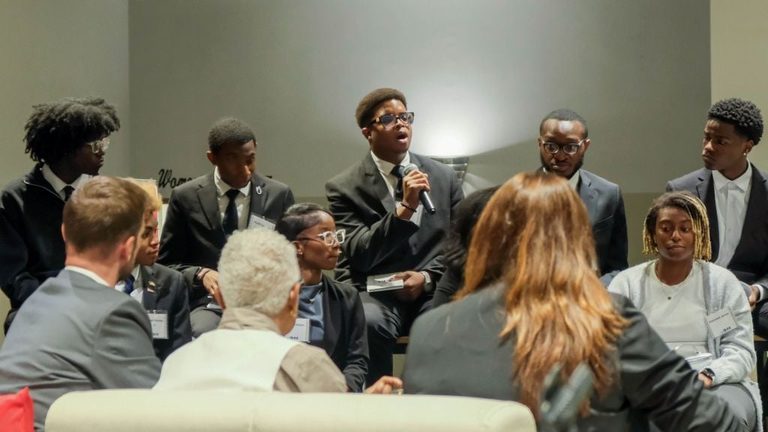
About 120 community members gathered Tuesday evening at the Boutwell Auditorium to hear the first public presentation of GoBHM’s multimodal transportation vision for Birmingham. Project managers Christine Argo, deputy director of strategic projects for the Birmingham Department of Transportation; James Fowler, chief of public infrastructure; and Charlotte Shaw, CEO of the Birmingham‑Jefferson County Transit Authority fielded questions from a panel of ten high‑school and college‑aged residents.
Putting people first
Argo explained that “multimodal transportation really just means giving people more ways to move around the city of Birmingham.” She noted that the plan expands options for walking, biking, rolling, riding transit, and driving, aiming to reduce the city’s historic reliance on the automobile.
The six‑priority framework centers on expanding travel choices, improving access to jobs and everyday destinations, building connected urban villages and corridors, reconnecting neighborhoods, and making safety a core consideration. Shaw emphasized that revitalizing urban villages “puts the vitality back into urban areas, rebuilding communities and giving people access to where they need to go.”
Mayor’s vision of opportunity
Mayor Randall Woodfin framed the initiative as a matter of access and opportunity. “If we want to be a competitive city and attract industry and jobs, our residents must be able to get to their places of employment,” he said, adding that the solution is “not rocket science.”
Practical steps and ongoing projects
Fowler warned that “we can’t afford to send buses everywhere,” so the plan focuses on strategic land‑use changes that create density and destinations close together, then connect those key nodes. Ongoing projects include converting downtown streets to two‑way traffic as part of the Civil Rights Crossroads effort, building capacity for quick in‑house improvements, and developing an urban trail from downtown to Legion Field.
Birmingham’s bus rapid transit (BRT) and zone‑based micro‑transit services are already operating, and the broader GoBHM plan will guide investment, land‑use patterns, and infrastructure development for the next decade and beyond.
Youth voices shape the future
High‑school student Madison Major expressed enthusiasm, saying the forum helped her learn about public transportation systems she previously didn’t know existed. She praised the opportunity for young people to engage in the conversation and spread awareness among peers.
Councilman Darrell O’Quinn, a longtime advocate for overhauling the city’s car‑dependent infrastructure, voiced confidence in the plan, noting the commitment of Department of Transportation staff and other city departments. “This isn’t just another project for them. The staff believes in this work,” he said.
Next steps
Argo indicated that officials hope to bring the report to the City Council as early as December, with the goal of moving quickly toward adoption. “I’m pumped about it all! I’m just excited,” she said, adding that the timing feels right for getting things done without years of delay.
The GoBHM vision reflects a broader shift in Birmingham’s approach to mobility—moving from an auto‑centric past to a future where families, workers, and youth have safe, reliable, and varied ways to travel throughout the city.
Original reporting: BirminghamWatch — read the source article.