Birmingham residents will see a new approach to homeless encampments after the City Council approved an ordinance on Tuesday, according to Birminghamwatch.org. The measure prohibits unauthorized camping on city‑owned land, establishes a clear process for removing encampments, and connects individuals experiencing homelessness to outreach and shelter resources.
The ordinance outlines a tiered notification system. Encampments that pose an imminent threat to public safety or critical infrastructure will receive a two‑hour written notice in English and Spanish. Those near bridges, viaducts, or other priority locations will be given 24 hours, while all other unauthorized sites will receive a standard 48‑hour notice. When possible, trained outreach teams will contact residents before any clearance, offering connections to shelter and other services. Eligible personal belongings can be stored for up to 30 days.
Mayor Randall Woodfin emphasized that the policy balances public safety with compassion. “We can prioritize public safety while recognizing the humanity and dignity of people experiencing homelessness,” he said in a press release, as reported by Birminghamwatch.org. Deputy Chief Heath Boackle of Birmingham Police added that officers are working to deepen ties with the unhoused community and steer individuals toward available resources.
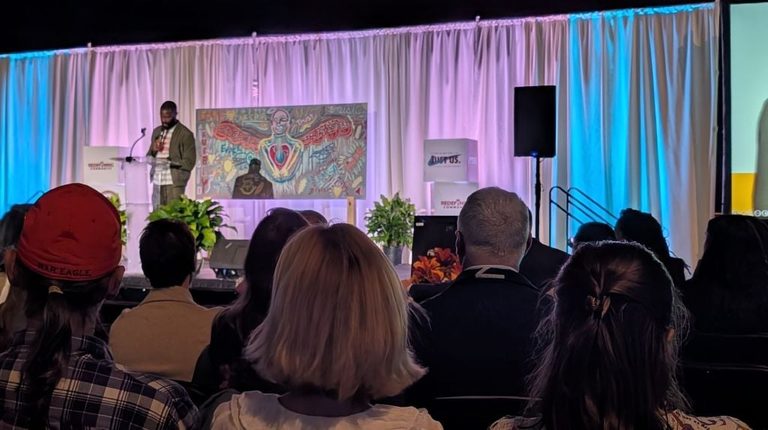
The ordinance arrives just days after Birmingham’s 2026 State of Homelessness Summit, where city leaders reaffirmed a goal to reduce chronic homelessness by 40 % within two years. As of September, the city counted 220 people experiencing chronic homelessness and 777 public‑school students without stable housing (Birminghamwatch.org).
Key components of the city’s broader strategy include the $2.4 million Home For All partnership with Faith Chapel, which opened 15 micro‑shelters in April that are currently filled. The city also announced the Birmingham Oasis, a .21‑acre daytime respite center at 600 Third Ave N., designed to link residents with health care and other essential services. Funding for homelessness initiatives has risen, with $3 million added to the general fund and $2 million earmarked for the opioid crisis (Birminghamwatch.org).
Alanah Melton, director of the city’s Unhoused Strategies initiative, said the ordinance “ensures outreach, compassion, and connections to shelter remain part of our response.” Community nonprofit Community on the Rise highlighted personal success stories, noting that former unhoused resident Michelle Roberts now owns a home after receiving city assistance (Birminghamwatch.org).
According to ABC 3340, the ordinance also mandates written notices in both English and Spanish and requires the city to develop procedures for assessing encampments, documenting removals, and storing personal property. The three‑part framework mirrors the city’s stated focus on public health, safety, access to shared spaces, and protection of critical infrastructure.
What’s next: The city will begin implementing the notice and removal process immediately, with outreach teams deployed to engage residents ahead of any clearance. Officials plan to publish a public dashboard tracking homelessness metrics in the coming weeks, providing residents with transparent data on progress toward the 40 % reduction goal.
Sources: birminghamwatch.org, abc3340.com