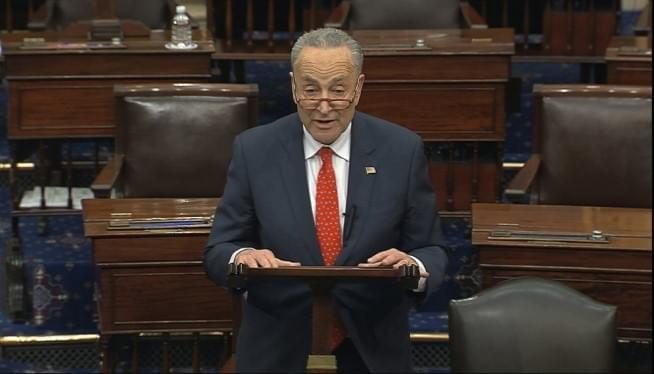
In the wake of the recent midterm elections, a growing number of newly elected Senate Democrats are publicly questioning the continued leadership of Minority Leader Charles Schumer. The 75‑year‑old New Yorker, who has served in the Senate for nearly three decades, is expected to seek the majority‑leader position now that Democrats hold a slim edge in the chamber.
Newcomers Express Preference for Fresh Ideas
At least five freshman senators have announced they will not support Schumer when the Democratic caucus convenes to select its new leader. Among them is Adam Hamilton, the Democrat who flipped a Senate seat in deep‑red Kansas. Hamilton told NBC’s “Meet the Press” that the party needs “fresh ideas and someone who can unite us instead of dividing us.”
Potential Challenger Emerges
Senator Chris Van Hollen of Maryland is reported to be “open” to a leadership bid. Van Hollen, a noted critic of the American Israel Public Affairs Committee, has attracted backing from progressive activist groups such as Indivisible, which advocates for an end to U.S. military aid to Israel. Indivisible co‑executive director Ezra Levin said Van Hollen has received “an outpouring of calls and is now in active listening mode.”
Established Voices Weigh In
Long‑time Democratic figures are also weighing the leadership conversation. Three‑term Senator Richard Blumenthal of Connecticut said the Senate needs “new energy and ideas,” while also affirming his intention to vote for Schumer. Blumenthal added that the chamber must “change the way it operates to get more done for the American people.”
Uncertain Support from Other Newcomers
Other freshman senators have remained undecided. James Talarico, who won a seat in Texas, said he will meet with every leadership candidate and ask tough questions about their vision, values, and experience. Meanwhile, a group of eight senators calling themselves the “Fight Club” – including independent Senator Bernie Sanders and Senator Elizabeth Warren – have not publicly committed to supporting Schumer.
Schumer’s Record and Recent Criticism
Schumer’s tenure includes raising more than half a billion dollars for Democratic Senate campaigns, with his aligned super PAC contributing over $354 million nationwide. Former Democratic aide Adam Jentleson praised Schumer’s role in what he called “the biggest Democratic sweep in the Senate since Watergate,” arguing that the question of his re‑election as leader is “straightforward” and should be answered affirmatively.
Nevertheless, some progressive activists criticize Schumer for not using the filibuster to block a 2025 defense‑spending bill that increased defense outlays while reducing domestic spending. Indivisible’s Ezra Levin called for Schumer’s resignation, saying the senator let “the country and the Democratic Party down” by failing to block the legislation.
What Lies Ahead
The upcoming leadership vote will be closely watched as Democrats seek to define their agenda in a narrowly divided Senate. With Alaska and Mississippi races still uncalled, the final composition of the caucus could further influence the leadership dynamics. Whether Schumer retains the confidence of his party or a new figure emerges will shape the Senate’s approach to legislation, oversight, and cooperation with the administration.
Original reporting: WMAL (Washington DC) — read the source article.