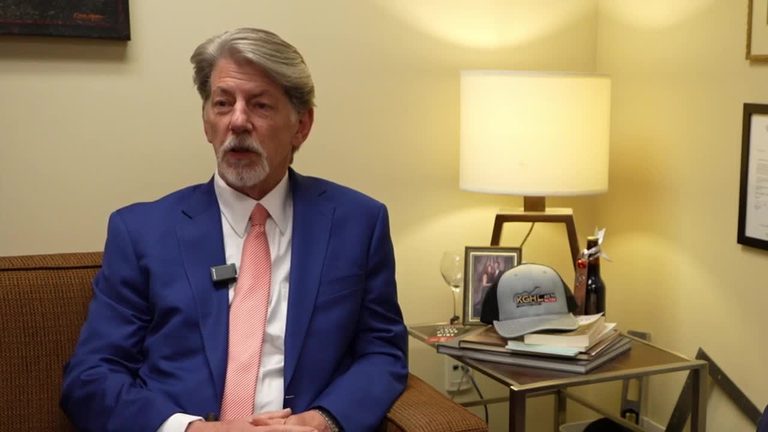
When a President travels to Billings, the preparation begins long before the motorcade arrives. Bill Dutcher, a 40‑year veteran of MetraPark, explains that the venue and surrounding hotels undergo a five‑day security operation that involves more than 100 soldiers, bomb‑sniffing dogs and exhaustive background checks on every person who might come near the President.
Quiet start, massive coordination
The process starts with a hush‑hush phone call from the White House advance team. No public announcements are made, and the Secret Service takes charge of sweeping every building, checking every electrical panel, plumbing line and potential hiding place. “No stone is left unturned,” Dutcher says.
MetraPark’s 189‑acre site is inspected room by room, including old barns and grandstands. Dogs are deployed, and soldiers move through the grounds, ensuring every corner is clear. The venue’s 36 full‑time employees all had their IDs checked during the week of a presidential visit, and anyone expected to be in close proximity to the President underwent an extra, fine‑tooth‑comb background review.
Hotels follow the same drill
Local hoteliers mirror the venue’s protocol. Mike Nelson, owner of the Northern Hotel and mayor of Billings, says staff may be instructed to lock employees in a room while the President moves from one location to another to prevent any interference. “They’re tough, but great at their jobs,” Nelson adds about the Secret Service.
Past presidential visits
Dutcher has witnessed visits from Presidents Ronald Reagan, George W. Bush and President Trump, who stopped in Billings in 2018. He also worked during candidate stops for future President Barack Obama, Hillary Clinton, Bernie Sanders and then‑candidate Trump, as well as a visit by Vice President Mike Pence.
The first George W. Bush visit in March 2001 drew 10,000 attendees, with the governor, both Montana senators, both representatives, three county commissioners and the Billings mayor in attendance. The White House press corps arrived on a separate plane, bringing about 100 media members. Bush spent the night in Billings. His second visit in 2006 was a smaller, party‑organized event of roughly 5,000 people, set against the backdrop of the Iraq War.
Local media’s role
In 1995, KTVQ received a call from the White House to host a live town hall with President Clinton. Former anchor Gus Koernig recalls the intense preparation: engineers slept only a few hours a week, the studio was stripped down, and metal detectors cleared staff before the broadcast. The Secret Service even cleared the entire building, sending office and radio staff outside before allowing them back in.
During the town hall, about 60 people filled the studio, and questions were screened in advance. Clinton arrived by limousine, stepped outside to greet the crowd on Third Avenue North and North 32nd Street, then entered the studio where Koernig introduced him as “the President of the United States.” The broadcast ran just over an hour and was later rebroadcast on C‑SPAN.
Why the effort matters
For Billings residents, the security sweep is a reminder that the city can host the nation’s highest office with professionalism and pride. “For that hour the President is on the floor, the whole world is watching,” Dutcher says. “The crowd’s excitement feels like a stadium rock show.”
These preparations showcase Billings’ ability to work hand‑in‑hand with federal agencies, ensuring safety while allowing the community to experience a moment of national significance.
Original reporting: KTVQ Q2 Billings (local) — read the source article.