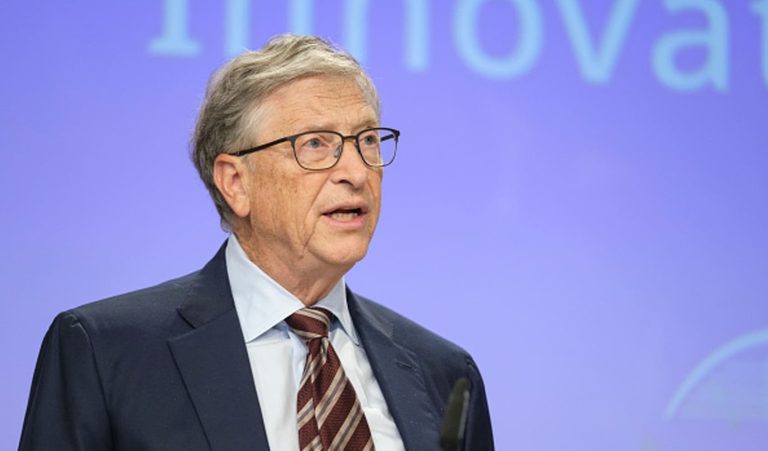
In a nationally televised interview on NBC’s Meet the Press, Microsoft co‑founder Bill Gates called on the United States to take the lead in shaping worldwide rules for artificial intelligence. He warned that forging a global consensus on AI safeguards could prove even more challenging than Cold‑War nuclear‑arms talks.
Trump’s firm position on AI
Gates referenced President Donald Trump’s recent post on Truth Social, where the President rejected calls for immediate federal guardrails on AI development. “Whoever wins AI, wins! We are leading China, and all others, and will continue to do so,” Trump wrote, underscoring his belief that the United States must stay ahead of rival nations.
Gates’ view on regulation and competition
While acknowledging Trump’s hard‑line rhetoric, Gates argued that sensible monitoring systems would not handicap the United States in its competition with China. “What he said is fine, but after he hears from me and other experts that this does not handicap us in whatever the nation‑state race is, we will come to a consensus,” he said.
Gates highlighted historic moments when the United States acted as a neutral catalyst for global agreements—aviation safety, ozone‑layer protection, and nuclear‑arms limits. He urged a similar approach for AI, saying, “Humanity is all in this together.”
Risks of unregulated AI
The philanthropist warned that the greatest danger now comes from bad actors using AI for fraud, power‑grid attacks, or bank‑account sabotage. Small groups equipped with advanced AI could achieve what only nation‑states could previously do, creating a new threat landscape.
He advocated for built‑in monitoring and safeguards within AI labs, noting that law‑enforcement agencies would otherwise have “nil” visibility into AI‑driven crimes. Gates stressed that such safety features can be added without slowing the pace of innovation.
Legislative efforts
Congress is already considering bipartisan legislation that would require AI companies to install a “kill switch” capable of shutting down dangerous systems instantly. Gates said a kill switch alone is insufficient, emphasizing the need for continuous monitoring and record‑keeping to prevent large‑scale cyber or bio attacks.
AI for global health and language access
Beyond security, Gates described how the Gates Foundation is partnering with about 60 AI firms to improve language models for non‑English speakers. He noted that error rates in African languages remain ten times higher than in English, posing serious risks for health‑care applications. The foundation aims to bring the quality of AI‑driven health interviews in any language spoken by a million or more people up to English‑level standards within five years.
Gates also praised AI’s role in guiding the foundation’s work, saying it helps identify the latest data on malaria, malnutrition, and other global health challenges, ensuring the foundation’s projected $200 billion spend over the next 19 years is directed where it can do the most good.
Context and criticism
Critics have pointed to Gates’ past association with the late Jeffrey Epstein, noting recent Justice Department releases that mention Gates in Epstein‑related emails. Gates has called that relationship “regrettable” and denied any illegal activity.
Nevertheless, his current message aligns with the Trump administration’s emphasis on American technological leadership and the need for prudent safeguards that protect citizens without stifling innovation.
Original reporting: NBC Connecticut — read the source article.