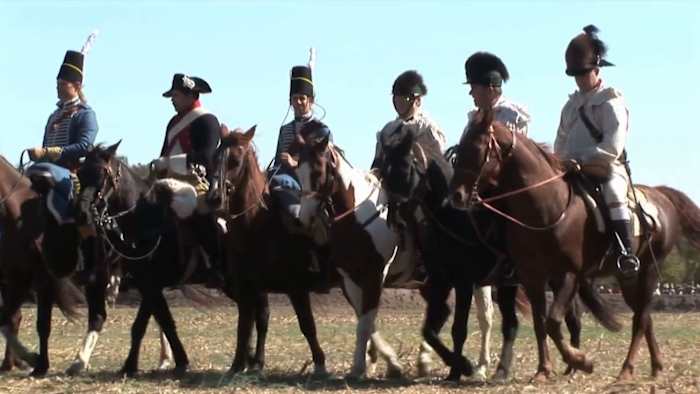
Bexar County is being framed as a surprising but vital player in the American Revolution, and this piece follows the Bexar Heritage Center and heritage outreach manager Mari Tamez as they bring that story forward in San Antonio. The article explains how Spanish Texas—through donations, livestock and even men—connected to the struggle against Britain, and how the Bexar America 250 project and Texas 250 initiative are working to make that part of the national story visible again. Visitors to the Bexar Heritage Center at the Bexar County Courthouse can explore exhibits and an online portal that dig into those local contributions, and community programs aim to tie that past to present pride in South Texas.
The Bexar Heritage Center has deep roots in regional history, and its new emphasis is on connecting Bexar County to the founding era. “We have an entire exhibit dedicated to Bexar America 250,” said Mari Tamez, heritage outreach manager for Bexar County. “There are a number of people who are unaware that Bexar County had an instrumental role in the American Revolution.”
At the time, the land that is now Bexar County was part of Spanish Texas, and Spain’s involvement altered the strategic balance in the colonies’ favor. Spanish officials and citizens funneled aid, goods and manpower to weaken British control, often through networks centered in places like Bexar. That means this region’s story is not a footnote but a thread in the larger narrative of independence.
Tamez lays out the math and the facts plainly to make the case local people can see and understand. “This particular region provided cattle, 9,000-10,000 head of cattle,” Tamez said. “They provided donations, and this historic Bexar County raised about $149,000 in today’s dollars to support the American Revolution.”
Those are concrete contributions with real impact: livestock for supplies and funds to support operations. Beyond money and food, the region also supplied people who participated in military efforts tied to Spain’s strategy in North America. “We gave financial support, we gave cattle and we also provided soldiers,” Tamez said. “This region was very, very involved in supporting the American Revolution.”
The Bexar America 250 effort plugs into the national America 250 and Texas 250 initiatives, but its focus is unapologetically local: make sure the story of South Texas is visible. That means museum exhibits, community events and an interactive online portal that lets curious residents and students dig into records and artifacts. The goal is simple — to reconnect modern audiences with how regional actions helped shape national outcomes.
The exhibit at the Bexar Heritage Center is housed inside the Bexar County Courthouse and pairs artifacts with clear interpretation so visitors can grasp both facts and context. Curators use maps, ledger excerpts and images of livestock branding to show how supply chains and donations flowed from this part of Texas. Tours and educational programs are tailored for school groups and adult learners so the message lands at every level.
For many residents, the idea that Spanish Texas was an active supporter of the Revolution is new and even a little surprising, and that surprise is the point. By spotlighting local stories, the Heritage Center invites people to see themselves in a wider national narrative. It changes the way a community thinks about its past and how that past informed the birth of the United States.
Public history projects like this rely on accessible storytelling and tangible displays, not only on dates and tallies. Bexar County’s emphasis on cattle counts and donated dollars is a hook, but the exhibit expands that into human stories — merchants, ranchers and soldiers who made decisions under complex political pressures. That human element is what helps visitors connect emotionally with a history sometimes taught as distant or abstract.
Organizers are also using digital tools to broaden reach beyond courthouse walls, offering an online portal that complements the physical exhibit. That portal collects documents, images and timelines to give researchers and casual browsers a richer picture. The combined museum-and-online approach aims to keep local contributions front and center as the nation marks 250 years.
At its best, this project brings Bexar County history out of the archives and into daily conversation across San Antonio and the surrounding region. It invites residents to claim a piece of the founding story and to consider how local choices echoed on a national stage. The work at the Bexar Heritage Center is a reminder that the story of America’s beginnings was made up of many places and many hands, including those from South Texas.