When David King set out for his morning run on September 11, 2001, he expected a routine day of training for the Army Ten‑Miler. Instead, the retired Army Special Forces major found himself in the middle of the nation’s worst terrorist attack.
Morning at the Pentagon
King reported to an Army G‑8 office on the first floor of the Pentagon. He was assigned to a small team of seven people in a recently renovated wing, and on that fateful morning only three of them were present. While the news was reporting the first plane striking the World Trade Center, King and his colleagues assumed it was a tragic accident.
“Of course, everybody just thought it was a fluke, a Cessna ran into it,” King recalled. Within minutes a second plane hit the other tower, confirming that the United States was under attack.
First signs of disaster
Realizing the gravity of the situation, King called his ex‑wife in North Carolina to warn her. A retired service member overseas emailed him, hoping for more information. King warned, “Two strikes already. They don’t know what’s going on, but there are other airplanes in the air, and this is probably a target waiting to happen.”
Just two minutes later, the Pentagon erupted in flames. “The whole place burst into flames,” he said.
Surviving the blast
Miraculously, King’s small office was spared by sturdy filing cabinets and a support column that absorbed much of the blast. He initially thought a truck bomb had detonated, but the smell of jet fuel made it clear it was an aircraft.
He rushed to find his sergeant, only to see the ceiling collapse at her desk. His colonel, who had been in the office, was never found. Though King escaped the initial explosion unscathed, he later suffered severe burns while searching for his coworkers.
Escape to the helipad
Seeing photos of his three sons spurred King to keep moving. “My pants had started melding to me because they’re nylon, and I saw pictures of my three boys and thought, I have to get the hell out of here,” he recalled.
A hole in a nearby wall offered a possible exit, but instead of another office, King emerged onto the Pentagon’s helipad, where the blast had ripped away all intervening walls.
Guided by a Pentagon police officer shouting, “Hey, come to the light! Come to the light!” King followed the illuminated path to safety.
Medical care and lasting scars
King was placed on a stretcher and taken by ambulance to Washington Hospital Center. He suffered burns over 22 % of his body, including second‑degree flash burns to his face and ears. The injuries left his skin “crinkled and messed up for several weeks.” He spent roughly five weeks in the hospital, where he praised the nursing staff as “just dynamite” and noted the doctor’s constant presence.
Remembering the fallen
Of the three people in his office at the time of the attack, King was the sole survivor. He still honors Staff Sgt. Maudlyn White, whose grave he visits each Memorial Day and Veterans Day in the Pentagon’s 9/11 section.
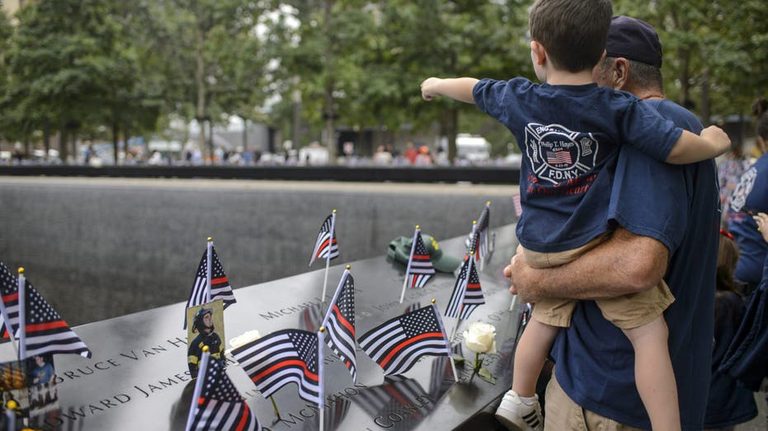
King now participates in 9/11 remembrance events, sharing his testimony to ensure the tragedy and the evil behind it are never forgotten. “I just wish people would not forget what happened and the evil that caused that,” he said.
Why his story matters
King’s account underscores the bravery of the men and women who served on 9/11 and the importance of preserving their memory for future generations. His experience also highlights the resilience of veterans who, despite life‑altering injuries, continue to serve their communities through education and remembrance.
Original reporting: Alexandria, VA News – WTOP News — read the source article.