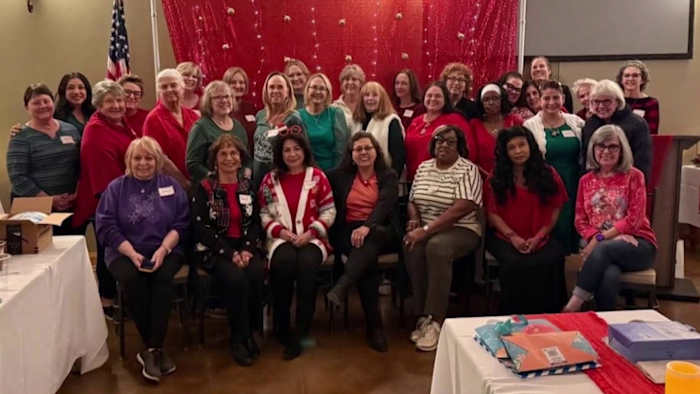
Lori Bohning of New Braunfels founded Beauty From Ashes Ministries to help women navigating life after the death of a spouse, and her nonprofit aims to address both the emotional and financial fallout many widows face. The Consumer Financial Protection Bureau found that household income for the typical widow drops nearly $30,000 and that 16 percent of newly widowed seniors fall below the federal poverty line. This piece looks at how Bohning’s program provides practical help, community, and faith-centered healing for more than a thousand women she’s reached so far.
The numbers are stark and they matter. According to the Consumer Financial Protection Bureau, widows often face a steep decline in economic stability, a reality that compounds grief and isolation for older adults. A nearly $30,000 average drop in household income and a 16 percent poverty rate among newly widowed seniors make clear that emotional loss can quickly become a financial emergency.
Grief is rarely just one thing, and Bohning hears that over and over when she sits down with women at group meetings. “Whenever I ask the question, ‘What do you need?’ I am also told, ‘To be seen, and understood and a place to for them to get support from others,’” she told KSAT, capturing how loneliness is often the echo beneath other needs. The ministry aims to answer both the visible and invisible calls for help.
Bohning started Beauty From Ashes Ministries nearly 10 years ago after her own loss, and she says the outreach has grown steadily since then. She estimates the organization has supported more than 1,000 widows with a mix of direct aid and relationship-building. “We have funds to help, for example, if there is a lady who is in need of car repair or help with rent or childcare,” Bohning said. “We also have a list of resources in community if we cannot answer or help with a specific need.”
The program is built around connection instead of just charity, with a Christian-centered approach that mixes talks and practical workshops. “We have the talks about widow topics that move the ladies with different perspectives,” she said. “Just giving them hope when they leave. We have share circles, workshops like home maintenance and cyber security and then social events.”
Those sessions create a space where women work through issues that go beyond the acute pain of losing a partner. They talk about changes to behavior, memory, and daily routine and learn new skills to regain a sense of control and safety. The support helps women rebuild routines and confidence as they transition into a different chapter of life.
Bohning uses the term many of these women borrow themselves: “It is called ‘widow brain,’” Bohning said. Some describe cognitive fog and emotional overload so intense that scans can look similar to those of someone recovering from a brain injury. Naming that experience makes it easier to treat with compassion and specific strategies rather than just telling someone to “get over it.”
Bohning’s work comes from personal experience. She lost her husband to cancer in 2015 and learned the hard contours of grief firsthand. “It took me about a year to accept he is not walking through those doors ever again,” she said. “Being a Christian, I know he’s in heaven, and that brings me so much peace.”
She keeps vivid memories of her husband Rob close and talks about them openly with the women she helps. “Rob was a Marine, so he was protective, and I really liked that,” Bohning said. “Very thoughtful and kind and down to Earth. Super funny. He would make these faces at church or something and I would be the one getting in trouble from laughing. What I miss the most is his honesty and integrity. There wasn’t a doubt in my mind that he loved me every day.”
The end of his life was a long fight but one that showed his resilience, Bohning says, and that strength shaped her response after he died. “He survived a lot,” Bohning said. “Surgeries, and even treatment in Japan. He wanted to live for us. He fought to the very end for us.” Those memories are part of why she turned pain into purpose.
Bohning believes the ministry grew from her own need to be seen and understood, and she thinks that perspective is exactly what other widows require. “I had to have gone through this to start this ministry,” Bohning said. “I understand widows and was able to create this program through the pain of my loss. There is beauty in some of this journey where God comes in and shows you (that) you are not alone.”
She also sees a structural opportunity: with the average American church including at least 40 widows, Bohning’s plan is to train congregations and leaders to use the BFA program as an ongoing resource. Her aim is to change how communities respond so widows aren’t left to navigate hardship alone.
If you want to help or take part, Beauty From Ashes Ministries is organizing an upcoming 5K fundraiser and always welcomes volunteers and donations to support its programs. The work is practical and personal, offering both immediate relief and the long-term companionship that helps people rebuild their lives.