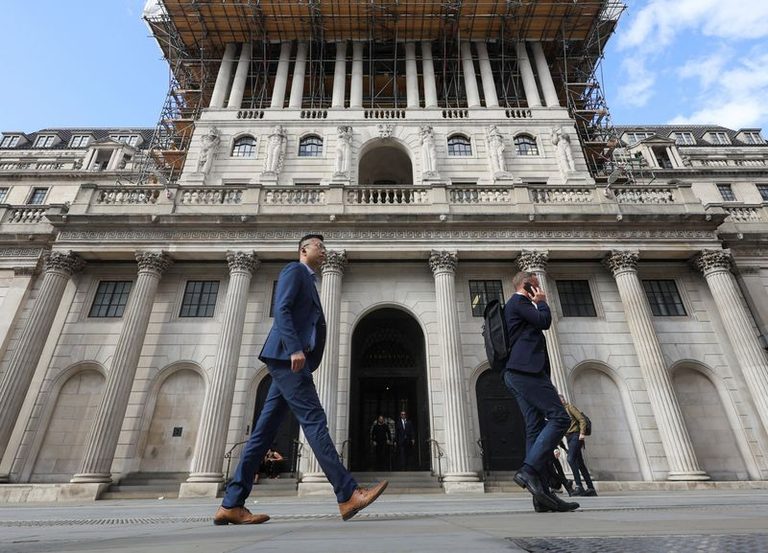
Manchester, England – The Bank of England is poised to keep its Bank Rate unchanged at 3.75% when it meets on Thursday, but market participants are closely monitoring the impact of a sharp rise in energy prices that could force a policy shift.
Poll expectations and market pricing
Reuters surveyed economists last week, finding that most expect the BoE to hold rates steady for the remainder of the year, with only three of nine Monetary Policy Committee members projected to vote for a hike at the upcoming meeting. Despite this, financial markets are pricing an 80% chance of a quarter‑point increase in November, the first of roughly four hikes investors anticipate over the next twelve months.
Energy shock reshapes outlook
The recent surge in natural‑gas and Brent crude futures – up nearly 20% this month – follows the Iran war and is adding pressure to UK inflation, which stood at 3.1% in August. If the trend continues, inflation could climb well above the BoE’s 2% target, a level the central bank has missed in all but three months of the past five years.
J.P. Morgan economist Allan Monks said the BoE is likely to stay on hold this week to avoid signaling a rapid tightening cycle, but added there is “a clear argument for the BoE not delaying a hike any longer” as energy‑price dynamics point to inflation peaking near 3.9% in February.
Contrasting views
Other analysts point to a cooling labour market and already‑elevated market rates that are helping to tighten financial conditions without further policy action. Evercore ISI noted that “the gap between market pricing and policymaker expectations is stark,” with the rates market discounting roughly four‑and‑a‑half hikes over the next year, while the Bank’s leadership appears to hope it can avoid any increase.
BoE Governor Andrew Bailey cautioned reporters, “Please do not leave this room thinking that the Bank of England is edging towards a hike,” underscoring the central bank’s desire to keep expectations anchored.
Gilt market and balance‑sheet plans
Investors are also awaiting the BoE’s annual update on its balance‑sheet reduction strategy. The Telegraph reported that the Bank may stop selling 20‑year and 30‑year gilts, which have suffered from a global sell‑off, potentially giving the Debt Management Office full control over gilt issuance.
U.S. asset manager Franklin Templeton described gilts as “particularly attractive” given the softer economic outlook and a cooling labour market, suggesting market participants see room for looser BoE policy than currently priced.
Outlook
With energy markets volatile and inflation pressures persisting, the BoE faces a delicate balancing act. While the immediate decision is likely to be a hold, the possibility of a November hike remains a significant factor for investors and households watching borrowing costs and the cost of living.
Original reporting: Appleton, WI News Feed (HLL/CB) — read the source article.