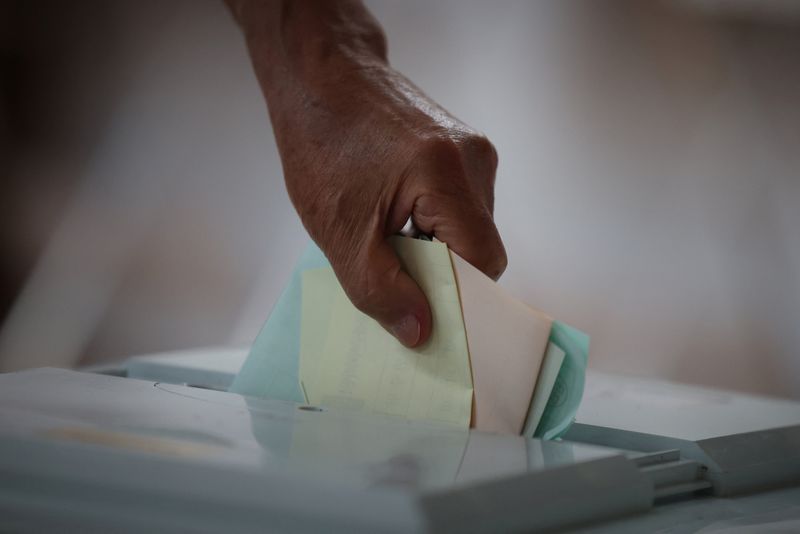
In a significant disruption to South Korea’s local elections, a shortage of ballot papers has led to public protests and demands for accountability. The National Election Commission (NEC) announced an investigation following the incident, which affected several polling stations across the country.
Protests in Seoul
In the Songpa district of Seoul, traditionally a conservative area, residents expressed frustration as they were unable to cast their votes due to the lack of ballot papers. Yoomi Lee, a local resident, described waiting for hours before additional ballots arrived, while others left without voting.
Protesters, identifying as far-right supporters, attempted to block election officials from leaving the polling station, accusing the process of being a ‘rigged election.’ They demanded a full revote and insisted that ballot boxes remain unopened until all waiting voters could cast their ballots.
Political Reactions
The ballot shortages have been widely criticized as a breach of voting rights. Song Eon-seog, co-campaign chief of the conservative opposition People Power Party, highlighted the issue as a serious violation, citing incidents in Seoul, Incheon, and Hwaseong in Gyeonggi Province.
President Lee Jae Myung expressed deep regret over the shortages, emphasizing the importance of safeguarding citizens’ voting rights. He called for those responsible to be held accountable. Meanwhile, Jo Seoung-lae, Secretary-General of the ruling Democratic Party, pledged to ensure the NEC is held responsible for what he termed ‘shoddy election management.’
NEC’s Response
The NEC has apologized for the inconvenience and announced a full investigation into the matter. However, they stated that the incidents do not justify delaying the election or conducting a rerun.
As the investigation unfolds, the situation highlights the critical importance of efficient election management to uphold democratic processes and ensure every citizen’s right to vote is respected.
Original reporting: Appleton, WI News Feed (HLL/CB) — read the source article.