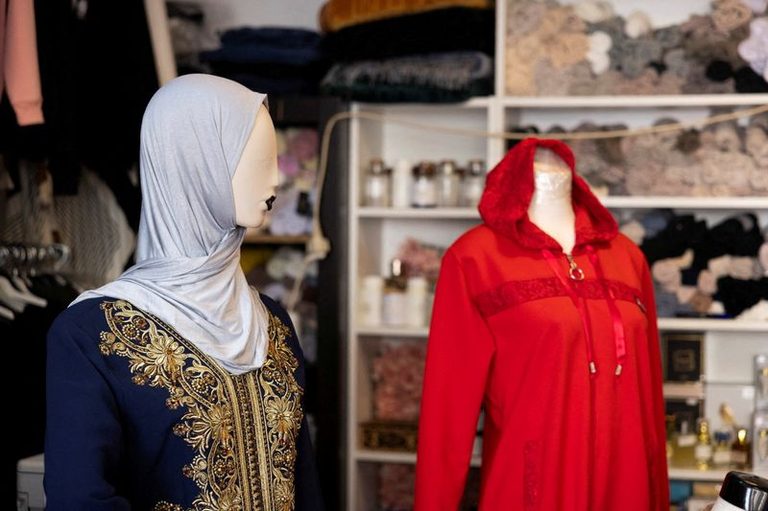
Vienna – Austria’s Constitutional Court announced on Monday that it expects to deliver a decision on the controversial school headscarf ban for children under 14 during the first half of 2027. The ban, introduced by the three‑party centrist coalition and passed by the lower house in December with backing from the far‑right Freedom Party, took effect on September 1.
Legal challenge and background
Four to twelve‑year‑old pupils and their parents have filed a constitutional complaint, arguing that the rule infringes on freedom of religion and the principle of equality before the law. The court’s statement noted that the plaintiffs contend the measure violates Austria’s constitutional guarantee of religious neutrality.
The current legislation requires schools to hold a discussion with any pupil who refuses to comply. If the discussion does not result in compliance, a fine ranging from €150 to €800 may be imposed.
Previous court precedent
In 2020, the same court struck down a similar restriction that applied to children under 10, finding that it discriminated against Muslims and that the state must remain religiously neutral in public schools. That decision set a precedent that the present case will likely reference.
Political context
The ban was supported by the coalition’s three centrist parties and the Freedom Party, while the opposition Greens – the smallest parliamentary group – voted against it. Rights organisations, left‑wing groups and the umbrella body representing Austria’s Muslim community have all voiced strong opposition.
Education Minister Christoph Wiederkehr told national broadcaster ORF that roughly 80 cases of non‑compliance have been reported nationwide. He described the figure as “actually fewer than feared and expected,” suggesting the policy’s impact may be limited.
What’s at stake
Should the court uphold the ban, schools across Austria will be required to enforce the dress code and potentially levy fines on families that defy it. A reversal would reaffirm the 2020 ruling, reinforcing the constitutional principle that the state must not favor or disadvantage any religion in public education.
Both outcomes carry significant implications for Austria’s ongoing debate over religious expression, parental rights, and the role of the state in school policy. The decision will be closely watched by European observers, as it adds to a broader continental conversation about how democracies balance secularism with individual religious freedoms.
International perspective
European human‑rights bodies have previously warned that bans targeting specific religious attire can breach the European Convention on Human Rights. Austria’s handling of the case will therefore be examined not only domestically but also in the context of EU standards on religious liberty.
As the court prepares its ruling, families, schools, and advocacy groups are bracing for a decision that could shape the nation’s approach to faith‑based expression in public institutions for years to come.
Original reporting: Appleton, WI News Feed (HLL/CB) — read the source article.