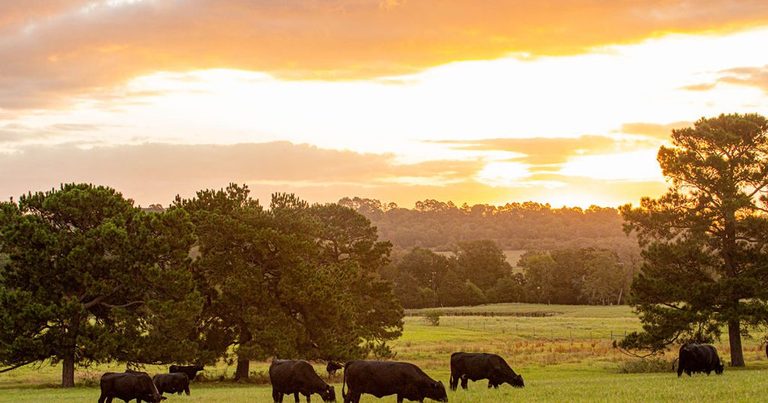
According to Community Impact, the Austin/Travis County Food Plan has secured an $8.91 million federal conservation award to help preserve small and mid‑sized farms across Central Texas. The grant, awarded through the USDA’s Regional Conservation Partnership Program, will be administered by The Conservation Fund in partnership with the Central Texas Food Bank.
The funding is earmarked for conservation easements on farms ranging from 25‑ to 500‑acre in a project area that includes Bastrop, Bell, Blanco, Burnet, Caldwell, Falls, Fayette, Freestone, Gillespie, Hays, Lee, Limestone, Llano, McLennan, Travis and Williamson counties. Recipient farms will be selected based on development risk, agricultural productivity, contribution to the regional food system, statewide importance, proximity to impaired waterways, and the intensity of recent farmland loss.
“This investment represents an important step toward protecting Central Texas’s most vulnerable farmland,” said Ellen Gass, Texas field representative for The Conservation Fund. Zach Baumer, director of Austin Climate Action and Resilience, added that the award “demonstrates what’s possible when community partners and the City unify around a shared vision for a more sustainable, equitable food future for Austin and our region.”
USDA estimates indicate that Travis County lost more than a third of its farms between 2002‑22, while the Hill Country now averages hundreds of acres of farmland loss each week. The new easement purchases are expected to be completed by 2031, providing a long‑term mechanism to keep working lands in agricultural production.
The grant expands on existing initiatives such as Travis County’s conservation easement program and aligns with the broader goals of the Austin/Travis County Food Plan, which city and county officials formally signed off on in 2024. The plan calls for additional strategies, including a potential farmland conservation fund in a future bond, incentives for agricultural activities, and support for urban farms.
Implementation will be overseen by the Austin/Travis County Food Plan Collaborative, established in June, which coordinates actions across local governments, community groups, and other stakeholders. Recent collaborative achievements include a food‑rescue mini‑summit, distribution of city and third‑party award funding, and the USDA farmland award itself.
What’s next: The USDA’s Natural Resource Conservation Service will work with the collaborative to identify eligible farms through a forthcoming selection process. Purchases of development rights are slated for completion by 2031, and Austin will continue to add performance‑tracking tools and seek additional funding to sustain momentum, as noted in a Nov. 19 memo from city officials.
Sources: communityimpact.com