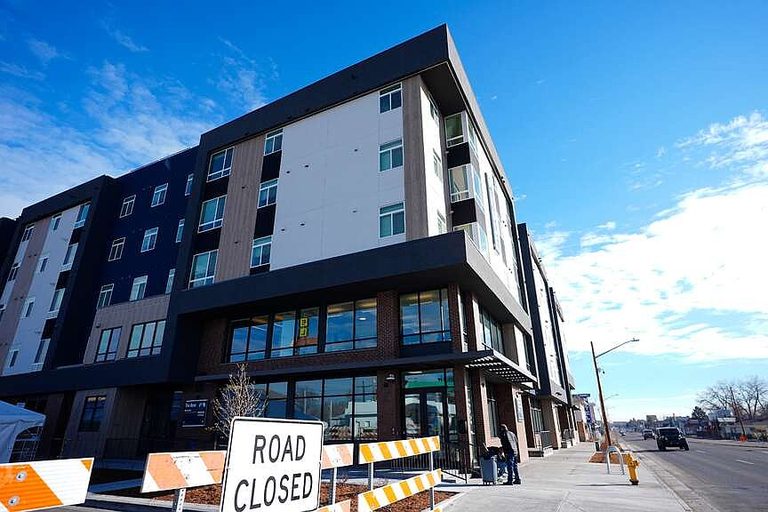
Austin officials are confronting a growing vacancy problem in the city’s affordable‑housing stock. Real‑estate data firm CoStar reports that the vacancy rate for all affordable units in Austin is nearly 16%, with over 4,500 units sitting empty. A healthy vacancy rate is typically around 5%.
Local families feel the squeeze
Mathew Davis, 49, lives in a homeless shelter after years of couch‑surfing and a stint living in his car. He earns a few hundred dollars a month donating blood plasma and says a $450‑a‑month tiny home with shared facilities is out of reach. “I don’t make enough money really to afford anything,” Davis told reporters. “I just keep trying to swim uphill.”
His story reflects a broader trend: the nation’s 11 million extremely low‑income renter households have only about 4 million affordable rental units available, according to the National Low Income Housing Coalition. Those households earn less than the federal poverty line—just under $16,000 for a single person—or 30% of the area median income, whichever is higher.
Tax‑credit program favors higher earners
Most low‑income housing financed in recent years is targeted at renters earning at least 50% of the area median income (AMI). In Austin, that threshold translates to roughly $47,000 a year for a single person, while an extremely low‑income earner makes under $28,000. The Low‑Income Housing Tax Credit (LIHTC) program, which has funded nearly 4 million affordable units over four decades, allocated only about 12% of its 2024 financing to units for the poorest households.
Economist Chris Edwards of the Cato Institute warned that the LIHTC’s complexity drives up construction costs and creates a lucrative industry of law and accounting firms. “If you’re going to subsidize affordable housing, you should give the money directly to tenants,” he told Congress, advocating for a greater reliance on housing vouchers.
Vouchers and the waiting game
Housing vouchers can bridge the gap, but only about one‑in‑four eligible families receive them, and waitlists can stretch for years. Some developers argue that without vouchers, building units for the extremely low‑income is not financially viable. Carmen Romero, president and CEO of True Ground Housing Partners, explained that a unit for renters earning 60% of AMI brings in $1,715 in rent but leaves just $140 after mortgage and operating costs.
Competition from market‑rate apartments
Affordable‑rent units for 60% AMI renters are now priced close to market‑rate apartments in cities like Austin, Denver, and Portland. In Denver, vacancy rates sit at 13% for 60% AMI units and 21% for 80% AMI units, according to the Colorado Housing and Finance Authority. In Portland, over 1,700 affordable units are vacant, with rents capped at $1,444—only $137 less than the average market‑rate one‑bedroom rent.
Prospective renters such as Portland resident Jaiden Barbee, who earns about 55% of the area median income, say they would rather pay a modest premium for a market‑rate lease to avoid the lengthy affordable‑housing application process.
City response
Austin’s housing department acknowledges the shortfall for the poorest residents and says it is giving preference to funding proposals that include 30% AMI units. The city’s long‑term goal remains to build 20,000 extremely low‑income units by 2027, yet only 543 were completed as of 2024.
For people like Davis, the lack of truly affordable options means continued hardship. “I want to shut the door at night and be able to sleep,” he said. “I really just want to find the right place.”
Original reporting: Texarkana Gazette — read the source article.