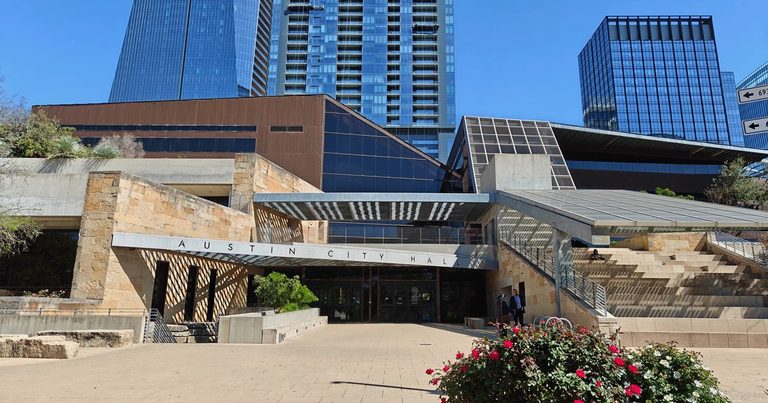
Austin City Council voted to adopt a resolution that instructs city staff to collaborate with the Capital Area Metropolitan Planning Organization (CAMPO) and the Texas Department of Transportation (TxDOT) to prioritize safety, walking, biking and transit in future improvements to Parmer Lane. The move comes amid concerns that a draft plan to turn the corridor into a multilane highway would increase traffic, noise and pollution for the neighborhoods that line the road.
CAMPO and TxDOT have been studying Parmer Lane west of MoPac as part of the CAMPO Project Readiness Program, a partnership that identifies future transportation needs for the region. In September 2021, CAMPO’s Transportation Policy Board adopted ten regional corridors for study, including Parmer Lane. At a September 14 CAMPO meeting, a proposal emerged to convert the segment between RM 1431 and MoPac into a four‑lane highway with four frontage‑road lanes north of SH 45 and two highway lanes plus six frontage‑road lanes south of SH 45.
Local residents, business owners and transportation‑advocacy groups quickly voiced opposition, arguing that the highway conversion would make the corridor more dangerous, raise noise and air pollution, and hinder walking, biking and public‑transit use. Council member Krista Laine said, “Parmer Lane is home to apartments, offices, shops and childcare centers … People live here, work here and send their kids to school here. I’m not confident that sufficient analysis has been completed to conclude that the current plan in fact best serves the many Austin residents along this corridor, now or in the future.”
The council’s resolution notes that the CAMPO proposal does not align with Austin’s 50‑50 mode‑share goal, which aims to limit single‑occupancy vehicle trips to no more than 50 % of all trips by 2039. An estimate from Connected Central Texas using the State Highway Induced Frequency of Travel calculator projects the conversion could generate an additional 40–75 million vehicle miles of driving each year. “Austin already has more highway lanes per capita than any other large metro in Texas, and that’s before all the new lanes being added to I‑35 and proposed for MoPac,” said Miriam Schoenfield, board president of Connected Central Texas. “Nobody has ever visited Austin and said, ‘You know what this city needs more of is highways.’”
District 6 resident Jose Loyola expressed optimism about the council’s direction: “Imagine a different Parmer Lane where people can visit their friends, families can bike to the park and older neighbors can move around their community with confidence. This resolution gives us an opportunity to imagine a Parmer Lane that connects communities rather than divides them.”
While the CAMPO recommendations are not final and no public timeline has been set, the council’s approval empowers city staff to work with regional partners to incorporate pedestrian paths, bike lanes, transit options and other safety features into any future Parmer Lane project.
What’s next: City staff will begin discussions with CAMPO and TxDOT to shape a Parmer Lane plan that reflects the council’s safety and multimodal priorities. Residents can expect public outreach as the agencies refine alternatives, though a specific schedule for hearings or a final decision has not yet been announced.
Sources: communityimpact.com, news.google.com