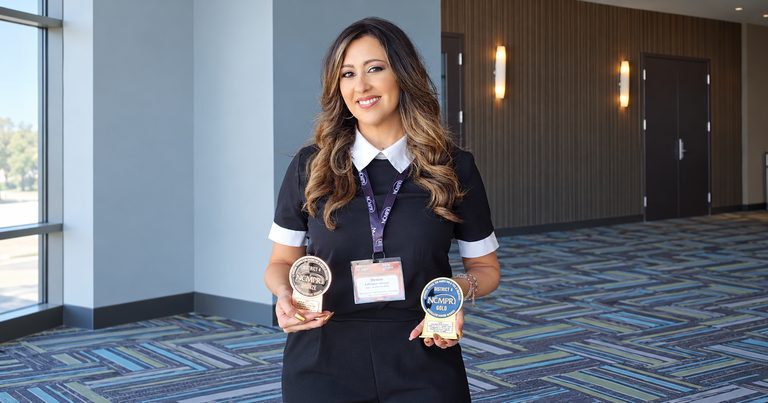
State Senate candidate Heidi Heino, the Republican running in Minnesota’s 36th District, warned that the recently enacted Office of the Inspector General (OIG) law may not stop fraud quickly enough. Heino said she “stress tested” the law against the massive “Feeding Our Future” child‑nutrition fraud scheme and other past scams to see whether the watchdog could have intervened earlier.
Testing the law against past fraud
Heino, who works as an underwriting executive, applied the same review methods she uses in the private sector. She pointed to a 2,800% jump in payments to Feeding Our Future from 2020 to 2021 – a surge that should have triggered an automatic alarm. The scheme allegedly siphoned $250 million from a federally funded child nutrition program during the COVID‑19 pandemic.
“When I stress tested against Feeding Our Future and some of the other fraud schemes that we had in Minnesota, it would have found the fraud eventually, but it’s way after the money was already gone and we would still be stuck trying to claw it back,” Heino told Fox News Digital.
Gaps in oversight and accountability
Heino argued that the law’s current safeguards are insufficient when red flags appear. She noted that Feeding Our Future was allowed to handle complaints against itself, creating a conflict of interest. “We had 30 complaints to the Minnesota Department of Education regarding the fraud and they are mostly overlooked or Feeding Our Future had to go correct itself and that was a huge gap there,” she said.
She also criticized the practice of issuing payments before verifying eligibility, citing the state’s Paid Leave program as an example. “They pay out before they have the doctor’s note certifying that this is actually true and they have verified it,” Heino said.
Proposed reforms
Heino’s recommendations include an immediate freeze on payments tied to suspect programs, a full review of the OIG’s authority, and the initiation of an outside audit. “The OIG has good bones, but it needs teeth,” she said.
She contended that independent audits would save more money than they cost, arguing that the expense of oversight is outweighed by the loss from unchecked fraud. “We get a lot of pushback saying this is going to be expensive, but is it? It will be less expensive to have an independent audit than it is going to be to have all the fraud and lose taxpayer dollars to fraudulent activities,” Heino added.
Broader context
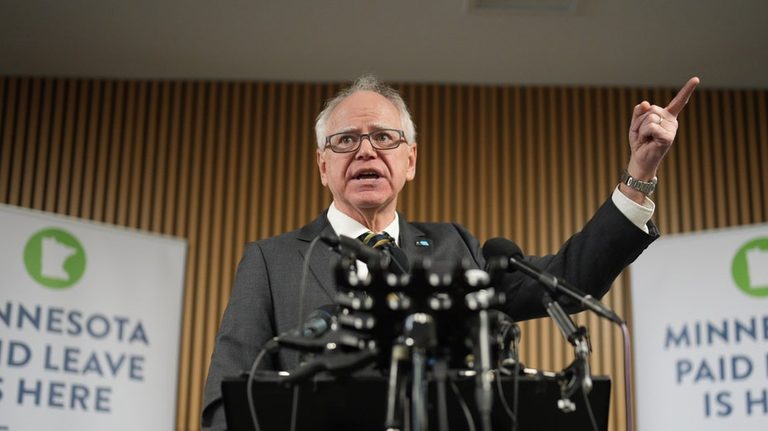
The OIG law was signed by Governor Tim Walz amid a wave of fraud scandals involving childcare, autism services, housing and disability programs. Republicans have blamed leadership and oversight failures for the losses. The Trump administration, through a federal anti‑fraud task force led by Vice President JD Vance, has also been monitoring the situation.
Bill Glahn, a policy fellow at the Center of the American Experiment, told Fox News Digital in August that fraud in Minnesota has not been fully addressed, reinforcing Heino’s concerns.
Personal stakes
Heino, a mother, grandmother and taxpayer, said she is fed up with the state’s handling of fraud, describing Minnesota as the “laughing stock of the nation” and noting that residents no longer want to identify as Minnesotans. “We need to funnel those resources to the people that actually need them and keep people committing fraud from taking our money and running away with it, buying luxury condos or homes, and then funneling it out of the country,” she said.
Fox News Digital reached out to Governor Walz’s office and the Minnesota Department of Education for comment but did not receive a response at the time of publication.
Original reporting: Fox News (HLL/CB) — read the source article.