The oldest koi in the Osaka Garden are pushing three decades old. Nobody knows exactly how many fish live in the pond — the count shifts with the seasons — but the man who knows them best, a city parks volunteer named Dave who has been coming here since the early nineties, says a few of the larger ones were already swimming when the garden was still new. That detail stopped me the first time I heard it.
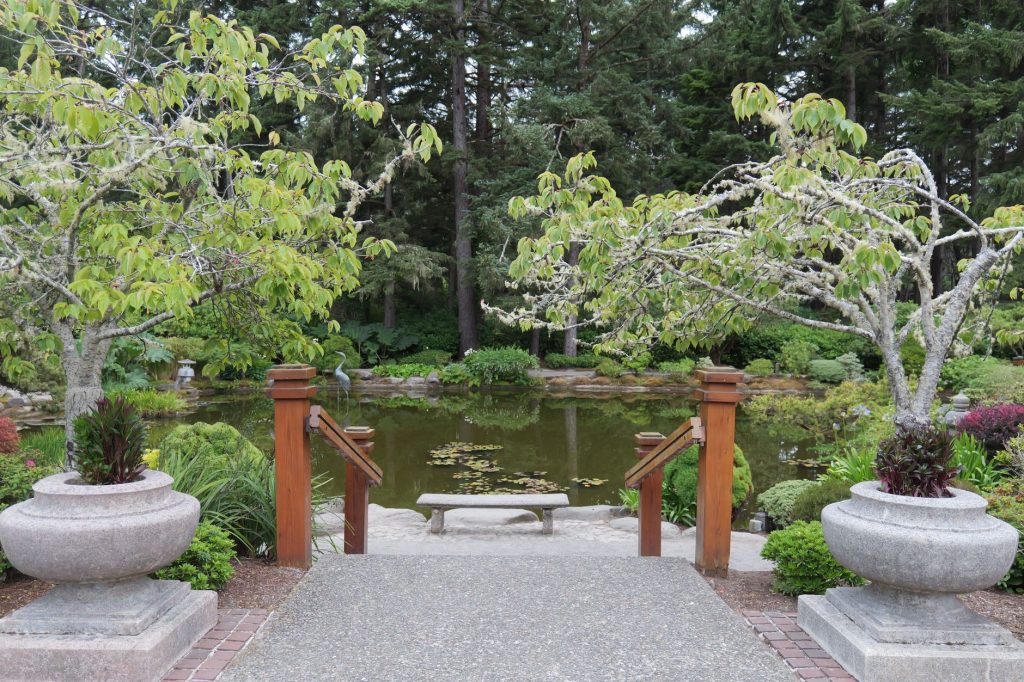
The Osaka Garden sits on the grounds behind Renton City Hall, off South Third Street, and most people who drive past it every day have no idea it exists. That’s not a knock — civic landscaping tends to disappear into the background — but it makes the garden feel like a genuine reward when you do find it. You park, walk around the building, and suddenly there’s a traditional Japanese garden: a small wooden footbridge arching over the koi pond, a stone lantern, carefully shaped shrubs, and water so clear you can count the fish from the bridge without squinting.
Dave is usually there on weekend mornings with a small bag of koi food. If you catch him, he’ll tell you which fish are which — at least the ones that have distinguishing marks. He doesn’t name them, he says, because names make it harder when one doesn’t make it through winter. But he knows their patterns, their ages, their personalities in the loose way you come to know any animal you’ve watched for years. Watching him toss feed and watching the koi rise to meet it is one of the quieter, more unexpectedly moving things you can do on a Saturday in Renton.
The garden itself was established as part of Renton’s relationship with its Japanese sister city, Nishiwaki, and the design reflects that intent without feeling ceremonial or stiff. It’s small — you can walk the whole thing in ten minutes — but it rewards slowing down. The plantings change with the season: in spring there’s color from flowering shrubs, in fall the maples do exactly what you hope they will, and in winter the bare structure of the garden becomes oddly appealing, all clean lines and still water.
There’s no admission charge and no formal hours, though the grounds follow roughly the same logic as city hall: daytime access is reliable, and weekend mornings tend to be quiet enough that you’ll often have the place to yourself. Bring a coffee. There’s a bench near the lantern where you can sit and do absolutely nothing for a while, which is rarer and more valuable than it sounds.
If you go hoping to see Dave, you might not find him — he’s not on a schedule, just a habit. But the koi are reliably there, slow and bright against the dark water, moving in that slightly hypnotic way koi do. Thirty years of fish, tended by a man with a bag of food and a long memory. That’s the whole pitch, and it’s enough.