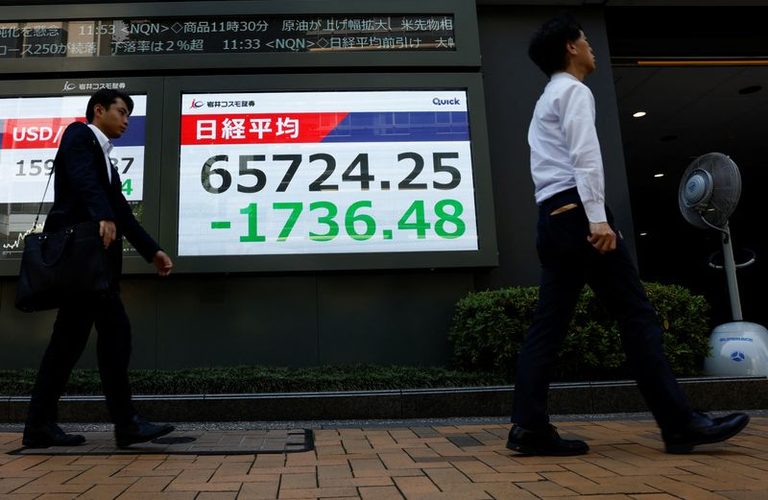
Asian investors faced a mixed trading day on Tuesday as the Japanese yen surged and regional stock indexes struggled for direction. The yen jumped as much as 0.6% to 153.51 per dollar, its strongest level since February 18, while the Nikkei 225 edged up only 0.2% after a period of volatility.
Market moves and broader economic backdrop
MSCI’s broadest index of Asia‑Pacific shares outside Japan rose 0.2%, led by a 1.2% gain in South Korea’s KOSPI. In the United States, S&P 500 e‑mini futures slipped 0.1% following a Labor Day holiday. Westpac analysts noted that the quieter start to the week in the U.S. was offset by ongoing tit‑for‑tat strikes between the United States and Iran, which continue to lift oil prices and dampen risk appetite.
Oil prices climbed for a third consecutive session, with Brent crude futures edging up 0.04% to $97.04 a barrel. The price increase follows Iran’s recent warning that any new attacks will be met with retaliation targeting energy infrastructure across the Persian Gulf, including U.S. oil and gas assets.
U.S. Treasury yields and dollar strength
The yield on the U.S. 10‑year Treasury bond rose 0.6 basis points to 4.788%, while the CME Group’s FedWatch tool showed markets still pricing a roughly 60% chance of a 25‑basis‑point rate hike at the Federal Reserve’s September 16 meeting—unchanged from a week ago. The U.S. dollar index, which tracks the greenback against a basket of six major currencies, hovered near a two‑week low of 98.82.
Japan’s economic data
Japan reported that its economy grew faster than initially estimated in the April‑June quarter, buoyed by stronger business spending, though the growth still fell short of analysts’ forecasts. Real wages in Japan rose 2.4% in July from a year earlier, marking the biggest increase since May 2021. Capital Economics analysts argued that the continued wage growth makes a case for the Bank of Japan to consider accelerating its tightening cycle.
Other regional highlights
In Australia, the S&P/ASX 200 slipped 0.6% after local consumer sentiment fell sharply in September, reflecting concerns over higher living costs and fuel prices. Gold prices rose 0.5% to $4,428.23 per ounce, while cryptocurrencies saw modest gains: Bitcoin nudged up 0.1% to $79,333.01 and Ether climbed 0.2% to $2,498.94.
Overall, the combination of a strengthening yen, heightened geopolitical tension in the Gulf, and mixed economic data kept Asian markets on edge, highlighting the interconnected nature of currency moves, commodity prices, and investor sentiment.
Original reporting: Appleton, WI News Feed (HLL/CB) — read the source article.