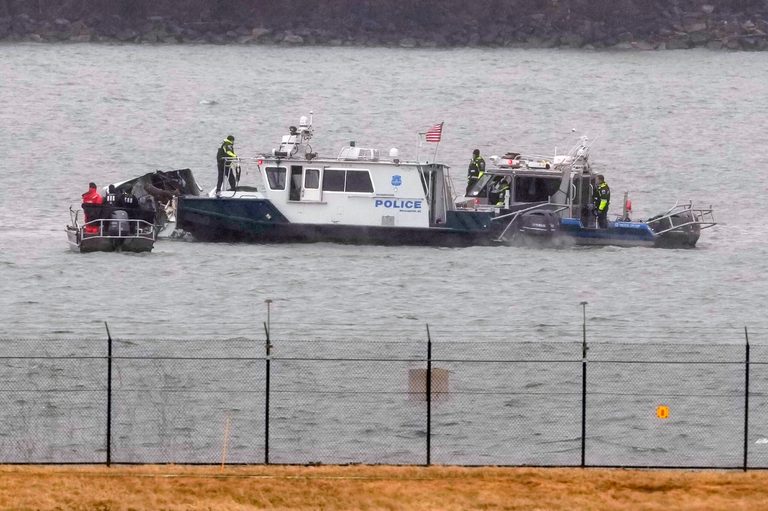
The U.S. Army has finished a thorough investigation into the tragic midair collision that occurred last year near Washington, D.C., when an American Airlines flight and a Black Hawk helicopter collided, killing all 67 people aboard both aircraft. The report, completed in May and shared with families of the victims, identifies a cascade of systemic breakdowns and recommends sweeping safety reforms for Army helicopter operations nationwide.
Key findings of the Army investigation
According to the lieutenant general who authored the report, “breakdowns across all layers of conflict management caused this accident,” with the most critical factor being two failed radio transmissions that prevented the helicopter crew from recognizing Flight 5342 as it approached Reagan National Airport’s alternate runway. Night‑vision goggles worn by the military pilots further limited their field of vision, making it difficult to spot the commercial jet amid city lights.
The Army also highlighted the role of the air‑traffic controller at Reagan National Airport, noting that more decisive action in the control tower could have averted the collision. While the findings largely echo the National Transportation Safety Board’s conclusions, the Army’s review expands the scope to include military‑specific operational practices.
Recommendations for future safety
The report urges the Army to conduct a systematic review of helicopter flight operations in every major city where its aircraft operate, not just the Washington, D.C., area. An Army official, speaking on condition of anonymity, confirmed that reviews are already under way for helicopter missions in Los Angeles and the Seattle‑Tacoma region.
Specific recommendations include:
- Implementing advanced collision‑avoidance technology on all Army helicopters.
- Improving radio communication protocols to ensure continuous contact between pilots and air‑traffic control.
- Reevaluating night‑vision equipment usage during high‑traffic periods.
- Standardizing safety training that emphasizes coordination with civilian air‑traffic systems.
Families push for congressional action
The families of the victims, many of whom were traveling from Wichita, Kansas, have long called for Congress to pass legislation requiring aircraft to be equipped with reliable traffic‑awareness systems. In a statement, the Families of Flight 5342 group said, “It’s a simple concept anyone can understand: aircraft should be able to see each other in the sky. The technology is proven. All that’s required is the political will to do the right thing.”
Both the House and Senate have passed separate aviation safety bills, but lawmakers are still negotiating a compromise measure that would fund the mandated technology upgrades and establish stricter oversight of military flight operations.
What this means for the community
While the investigation focuses on federal and military aviation, the safety recommendations have direct implications for local communities that host Army helicopter bases and training sites. Improved collision‑avoidance systems and clearer communication protocols could reduce the risk of future accidents over populated areas, protecting both civilians and service members.
Local officials in cities with Army aviation activity are encouraged to monitor the upcoming congressional legislation and work with military partners to ensure that any new safety standards are promptly implemented.
Looking ahead
The Army’s report underscores the importance of proactive safety measures and inter‑agency coordination. As the review expands to other major cities, the military hopes to set a national standard that prevents another tragedy like the DC midair collision.
Original reporting: Alexandria, VA News – WTOP News — read the source article.