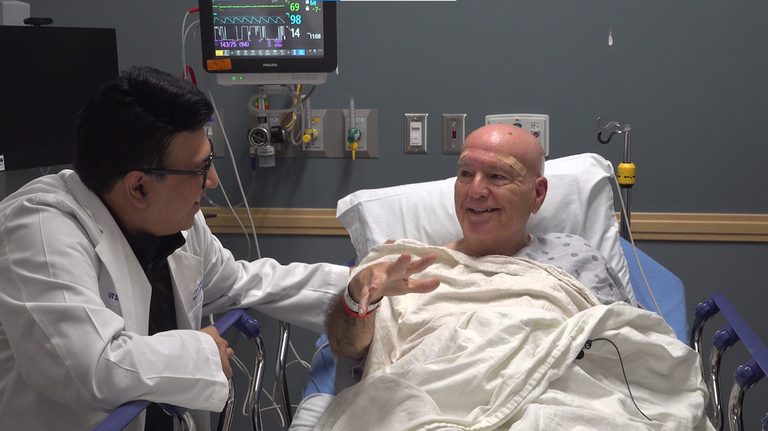
Bud Leavell, 72, a retired salesman and Air Force veteran who lives in Arlington, Texas, has struggled with severe tremors since his Parkinson’s diagnosis in 2017. The shaking made it difficult for him to enjoy his favorite hobby of repairing antique radios in his garage and to perform everyday tasks that require fine motor control.
New ultrasound treatment offers rapid relief
On April 13, Leavell underwent a focused ultrasound procedure at UT Southwestern Medical Center. The treatment uses high‑energy ultrasound waves that are precisely directed through the skull to target specific brain nuclei responsible for tremor. Unlike deep brain stimulation, which requires a surgical opening of the skull and implantation of a device, the ultrasound method is completely non‑invasive.
Dr. Bhavya Shah, a neuroradiologist at the medical center, explained that the ultrasound energy heats and ablates the targeted nerve bundles, stopping the abnormal electrical activity that causes tremors. Before permanently removing tissue, the team first applies low‑energy ultrasound to confirm that the patient’s symptoms improve, allowing them to verify the correct target.
Immediate and lasting results
Leavell reported that his tremor vanished within minutes of the procedure. At a follow‑up appointment, his doctor confirmed that the tremor remained well‑controlled, and Leavell humorously replied, “What tremor?” He said he can now hold his hand steady, use tools, and even eat without difficulty—though he jokes that his love of food may become a new challenge.
He also returned to repairing radios, a pastime that had been nearly impossible during his years of shaking. Leavell expressed gratitude for the medical team’s professionalism and flexibility, noting that “God is in control of the circumstances in my life and will continue to be.” He encourages anyone who might be a candidate for the therapy to consult a movement‑disorder neurologist promptly.
Potential risks and considerations
Dr. Shah cautioned that side effects occur in roughly 20‑30 % of patients and may include numbness or tingling around the mouth and fingertips, difficulty walking, talking or swallowing, weakness in the limbs, balance problems, or short‑term memory issues. These effects generally improve over time.
Unlike deep brain stimulation, focused ultrasound does not leave an implant that can be reprogrammed if symptoms return. If tremors reappear, a patient may need another ultrasound session or consider other interventions.
Looking ahead
Focused ultrasound received FDA approval in January 2026 for treating primary motor symptoms of Parkinson’s disease, such as stiffness and slowness, in addition to tremor. While short‑term outcomes appear promising, long‑term data are still being collected. Dr. Shah remains optimistic about the technology’s potential and its possible applications to other neurological conditions.
Leavell’s experience highlights a new, less invasive option for Parkinson’s patients seeking alternatives to medication or implanted devices, and underscores the importance of discussing all treatment avenues with a qualified specialist.
Original reporting: Fox News (HLL/CB) — read the source article.