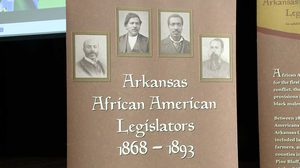
In Little Rock, Arkansas, a significant event took place at the Mosaic Templars Cultural Center, where local leaders, educators, and historians gathered to honor the first Black legislators of Arkansas. This symposium, organized by the Black History Commission of Arkansas, was part of the celebrations leading up to America’s 250th birthday, focusing on the contributions of Black Arkansans during the Reconstruction era.
Celebrating Pioneers in Governance
From 1868 to 1893, at least 84 Black men were elected to the Arkansas General Assembly. This marked a historic period where African Americans first served in the state’s government. Matthew Caston, an educator and researcher in Little Rock, emphasized the remarkable journey of these individuals, many of whom had been enslaved just months before taking office. Their resilience and determination were pivotal in shaping the state’s legislative landscape.
During Reconstruction, these Black officials played crucial roles in laying the foundations for modern America. They were instrumental in establishing public education, taxation systems, and infrastructure such as railroads. Phyllis Hammonds, a museum curator from Helena, Arkansas, noted their significant contributions to the 1868 Constitutional Convention, which granted Black males the right to vote.
Legacy and Impact
The Arkansas Delta emerged as a hub for African American communities and political activity. Dr. Donna Shelton, an independent historian, highlighted how Black towns formed across the state as free citizens eagerly exercised their rights. These legislators not only led new legislation but also served as sheriffs, postmasters, and business founders, establishing schools for Black youth.
However, by 1893, Black officials were pushed out of the Arkansas legislature, and it wasn’t until 1973 that another Black man held office. Despite these challenges, the symposium speakers stressed the importance of remembering these pioneers and their enduring legacies. As America reflects on its 250-year history, understanding the contributions of these early Black legislators is crucial for moving forward.
Original reporting: 40/29 / KHBS (NW Arkansas) — read the source article.