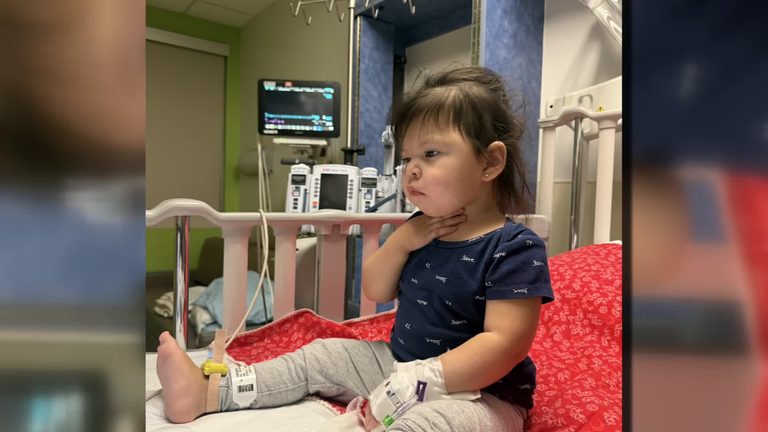
PHOENIX — When doctors warned the Hernandez family that their newborn daughter, Elliana, faced a life expectancy of less than five years because of pyruvate dehydrogenase complex deficiency (PDCD), the couple refused to give up hope. The rare, life‑threatening condition attacks the brain and central nervous system, often stalling normal developmental milestones.
Traveling for treatment
To pursue a possible solution, the family began traveling regularly from Phoenix to Philadelphia, where an investigational medication called dichloroacetate (DCA) is being tested in a Phase III clinical trial for PDCD. The trial, now enrolling nearly three dozen children nationwide, aims to determine whether DCA can improve neurological function and extend life expectancy.
Early signs of improvement
According to Tomas Hernandez, who spoke on “Good Morning Arizona,” Elliana’s progress has been “remarkable.” He described a transformation from a baby who could not roll, sit, or hold her head up to a child who now crawls, walks in a gait trainer, and has spoken her first word, “dada.” Brenda Hernandez added that the change has restored a sense of optimism that had been scarce since the diagnosis at eight months old.
Medical background
Elliana’s condition was confirmed after a genetic swab revealed a mutation in the PDCD gene. The diagnosis came after a year of developmental concerns and a referral to a neurologist. Physicians explained that the disease is typically terminal, with most children not surviving past age five.
Regulatory outlook
The U.S. Food and Drug Administration has set a target action date for DCA at the end of 2026. If approved, the medication could become available at local hospitals across Arizona, eliminating the need for families to endure long trips to Philadelphia. Tomas Hernandez emphasized that broader access would also reduce the lengthy wait times currently required for specialist appointments.
Family’s hopes for the future
While the Hernandezes recognize that the medication may be a long‑term commitment, they are encouraged by the steady gains. “It would be our decision to take her off, but we’re seeing so much improvement that it looks like a lasting treatment,” Tomas said.
Raising awareness
The family hopes their story will alert other Arizona residents to the existence of PDCD and the potential of clinical trials. “It can affect anyone, anytime,” Tomas noted, urging parents to stay vigilant and seek early medical evaluation when developmental delays appear.
What’s next?
As the trial continues, the Hernandez family plans to remain active participants, monitoring Elliana’s response to DCA and sharing updates with the broader community. Their experience underscores the importance of research, early diagnosis, and the promise that innovative treatments can bring to families facing rare, devastating diseases.
Original reporting: azfamily KTVK/KPHO Phoenix (news) — read the source article.