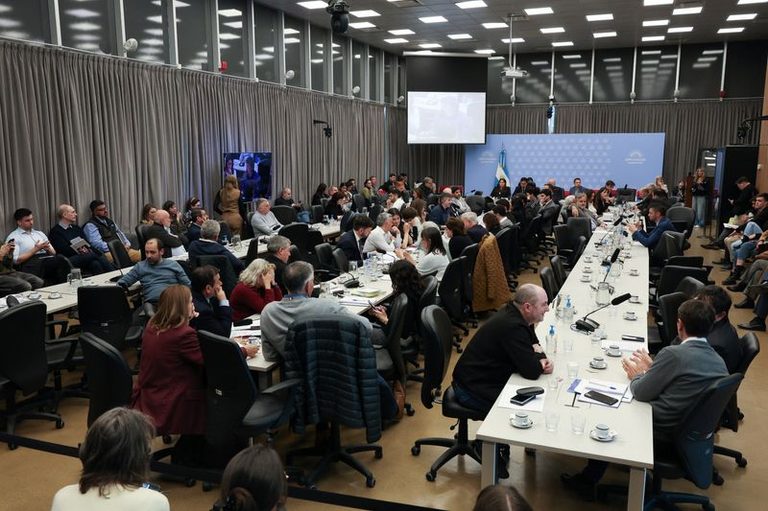
Buenos Aires – In a move that sets the stage for next year’s presidential election, Argentina’s government submitted its 2027 budget proposal to Congress on Tuesday. The bill outlines President Javier Milei’s economic outlook and spending priorities, signaling a hopeful outlook for the nation’s economy and a firm stance on national sovereignty.
Economic projections and fiscal targets
The budget projects a 4% increase in gross domestic product for 2027, up from an expected 3% growth this year. Officials also anticipate a trade surplus exceeding $15 billion in the coming year, a notable improvement for a country that has struggled with balance‑of‑payments deficits. Annual inflation is forecast at 18%, a marked decline from the 29% rate recorded this year, suggesting that Milei’s austerity‑driven policies are beginning to take effect.
Defense spending and the Malvinas claim
Among the most striking elements of the proposal is a call for increased defense spending. Milei argues that a stronger military budget is essential to protect Argentina’s longstanding claim to the Falkland Islands, known locally as the Malvinas. The president cited recent signals from U.S. President Donald Trump that Washington’s historic neutrality on the dispute could become more flexible, reinforcing the need for a robust defense posture.
Political context and election timing
Argentina is slated to hold presidential elections in October 2027, and Milei is widely expected to seek re‑election. The budget is therefore positioned as the administration’s final full‑year fiscal plan before the campaign, serving as a roadmap for both economic and political priorities heading into the vote. Analysts note that the proposal’s emphasis on fiscal discipline, combined with a modest boost to defense, reflects Milei’s broader strategy of cutting wasteful spending while safeguarding national interests.
Legislative process and budgetary history
Following its introduction, the bill will move to the budget committee before reaching the full chamber of Congress. Argentina has a history of operating without an approved budget for extended periods, often relying on roll‑over funding from the previous year when legislative approval stalls. The successful passage of this budget will be a critical test of Milei’s ability to secure legislative support for his reform agenda.
Implications for Argentine families and businesses
For Argentine families, the projected slowdown in inflation offers a potential reprieve from the soaring cost of living that has plagued households in recent years. Meanwhile, the anticipated trade surplus could translate into more stable employment opportunities, particularly in export‑oriented sectors such as agriculture and manufacturing. Business leaders have expressed cautious optimism, noting that a clearer fiscal framework may encourage investment and reduce uncertainty.
Looking ahead
As the budget moves through Congress, all eyes will be on how Milei balances his austere economic program with the political realities of an upcoming election. The proposed increase in defense spending underscores a renewed focus on national sovereignty, while the economic forecasts aim to reassure voters that the administration’s policies are delivering tangible benefits.
Original reporting: Appleton, WI News Feed (HLL/CB) — read the source article.